Healthcare robotics projects fail primarily when leadership focuses on technical deployment while neglecting cultural readiness and staff engagement. Success depends on a structured healthcare robotics adoption change management strategy that aligns technology with clinical workflows; this includes prioritizing interoperability and staff training to ensure robots augment human labor effectively.
In many Australian healthcare facilities, sophisticated robots purchased with high hopes often end up as expensive shelfware, gathering dust in storage rooms. This failure usually stems from a focus on the hardware rather than the humans who must use it daily. When leadership overlooks the complexities of cultural shifts and clinical workflows, even the most advanced technology becomes a burden instead of a benefit. Successful adoption requires a strategic bridge between technical capability and frontline trust. This article provides a definitive roadmap for leading a robotics transformation. You will learn how to navigate the three pillars of change management, overcome staff resistance through practical training, and ensure your systems remain interoperable and compliant. Our goal is to move beyond the pilot phase and achieve lasting, scalable operational integration within your facility.
The Rise of Robotics Shelfware in Australian Healthcare
In the Australian medical sector, a new and expensive phenomenon is emerging: robotics shelfware. This term refers to sophisticated autonomous mobile robots or telepresence units that, despite their significant price tag, end up relegated to storage closets or unused corners of a facility. The hardware itself is functional, but the integration failed to take root in the clinical environment.
According to the 2026 Digital Pulse Report, the push for AI and automation in healthcare is reaching a critical inflection point. While interest from Victorian hospital boards and aged care executives is at an all-time high, actual operational adoption continues to lag. The primary reason is that many organizations treat these deployments as a simple hardware procurement rather than a systemic healthcare robotics adoption change management project.
When a robot is purchased without a plan for robotic software integration or robust staff training and support, it becomes a liability rather than an asset. The difference between a high ROI and a wasted capital budget lies in how the technology is woven into the daily clinical workflow. Research suggests that when done correctly, as seen in recent Japanese studies where robot adoption increased nursing employment by freeing staff for higher-value care, the benefits are profound. Success depends on moving beyond the novelty mindset toward professional robotics integration services that prioritize human outcomes and operational readiness.
Top Reasons Why Healthcare Robotics Deployments Fail to Stick
The transition from procurement to daily utility often stumbles because of a tech-first rather than a problem-first strategy. In a tech-first approach, a facility selects a high-end unit based on manufacturer specifications without auditing the physical and operational reality of the ward. Conversely, a problem-first approach identifies a specific friction point, such as clinicians spending hours on manual haulage, and seeks robotic software integration specifically to alleviate that burden.
Environmental factors frequently trigger the early abandonment of these systems. Victorian hospitals, particularly older facilities with retrofitted wings, present unique challenges like narrow corridors, heavy fire doors, and uneven flooring. If the initial deployment does not account for Wi-Fi dead zones or lift communication protocols, the robot will frequently trigger a "robot running workflow cancelled" error. This specific fault is often a symptom of poor environmental mapping or a failure to scope technical requirements beyond the robot’s own hardware. When a unit repeatedly stops mid-corridor or fails to call an elevator, it ceases to be a tool and becomes an obstacle.
Furthermore, under-scoping the human element leads to immediate friction. Successful robotics integration services require more than just technical setup; they necessitate a deep dive into how the machine interacts with the existing staff hierarchy. Without comprehensive staff training and support, employees may view the robot as a competitor for space or a complication in their already high-pressure routines. When the workforce does not understand how to clear a minor fault or interact with sensors, the resulting frustration leads to abandonment. Addressing these technical and human hurdles is the foundational step in effective healthcare robotics adoption change management.
Healthcare Robotics Adoption Change Management: The Three Pillars
Transitioning from a hardware procurement mindset to a systemic framework requires addressing three distinct pillars: Cultural Readiness, Technical Interoperability, and Operational Training. If any of these pillars are weak, even the most advanced mobile robot remains an expensive novelty rather than a functional tool.
Cultural Readiness involves reframing the narrative from displacement to augmentation. Data from recent Japanese studies suggests that automation actually expands service capacity; robot adoption was associated with a 39% increase in nursing employment and a 28% increase in care workers at the facility level. By offloading manual haulage and repetitive facility inspections, robotics allows clinicians to focus on high value patient care that requires human empathy and complex decision making.
Technical Interoperability moves beyond basic connectivity to ensure deep robotic software integration. The robot must exist as a functional node within the hospital ecosystem, not a siloed device. Finally, Operational Training ensures that staff do not merely know how to activate the machine, but how to troubleshoot and manage it within a live clinical environment.
To align with the five key principles of change management in a clinical setting, leaders should focus on specific healthcare metrics:
Patient Safety: Ensuring autonomous movements and sensor interactions never compromise clinical pathways.
Workload Reduction: Targeting the specific, repetitive tasks that contribute most to staff burnout.
Data Privacy: Maintaining rigorous standards for patient information and facility mapping during telepresence or monitoring.
Clinical Buy-in: Involving frontline staff in selecting the use cases to ensure the solution fits the ward's daily rhythm.
Auditability: Establishing clear metrics for success, safety, and ROI that leadership can track.
Specialized robotics integration services bridge the gap between technical potential and ward reality. By emphasizing staff training and support, facilities can mitigate the intimidation factor that often leads to abandoned hardware. This structured approach ensures that healthcare robotics adoption change management is treated with the same clinical rigor as any new medical protocol or surgical technology.
Bridging the Technical Gap: Interoperability and Software Integration

Transitioning from cultural readiness to technical execution requires a focus on how hardware communicates with existing digital infrastructure. In many Australian hospitals, robots fail because they operate as isolated silos. To prevent this, a deployment must achieve four distinct levels of interoperability. Foundational interoperability ensures basic connectivity between devices. Structural interoperability standardizes the data format for exchange. Semantic interoperability is more complex, allowing the robot and the Hospital Management System (HMS) to share the same clinical meaning of data. Finally, organizational interoperability ensures the technology supports the facility's overarching policies and workflows.
Robots must be integrated into Patient Administration Systems (PAS) to provide real value. For example, a delivery robot should ideally know when a patient has been discharged or moved to a different ward without requiring a manual update from a busy nurse. Disconnected data is a primary driver of the AI adoption stall, where high level technology is present but functionally invisible to the rest of the facility. Through robotic software integration, Exaptec bridges these gaps, ensuring that autonomous units receive real time data from existing management platforms. Our robotics integration services focus on building these custom software layers so that the robot becomes a seamless extension of the digital health ecosystem, rather than a standalone tool that inadvertently adds to the clinical workload.
Winning Over the Ward: Addressing Staff Resistance and Training
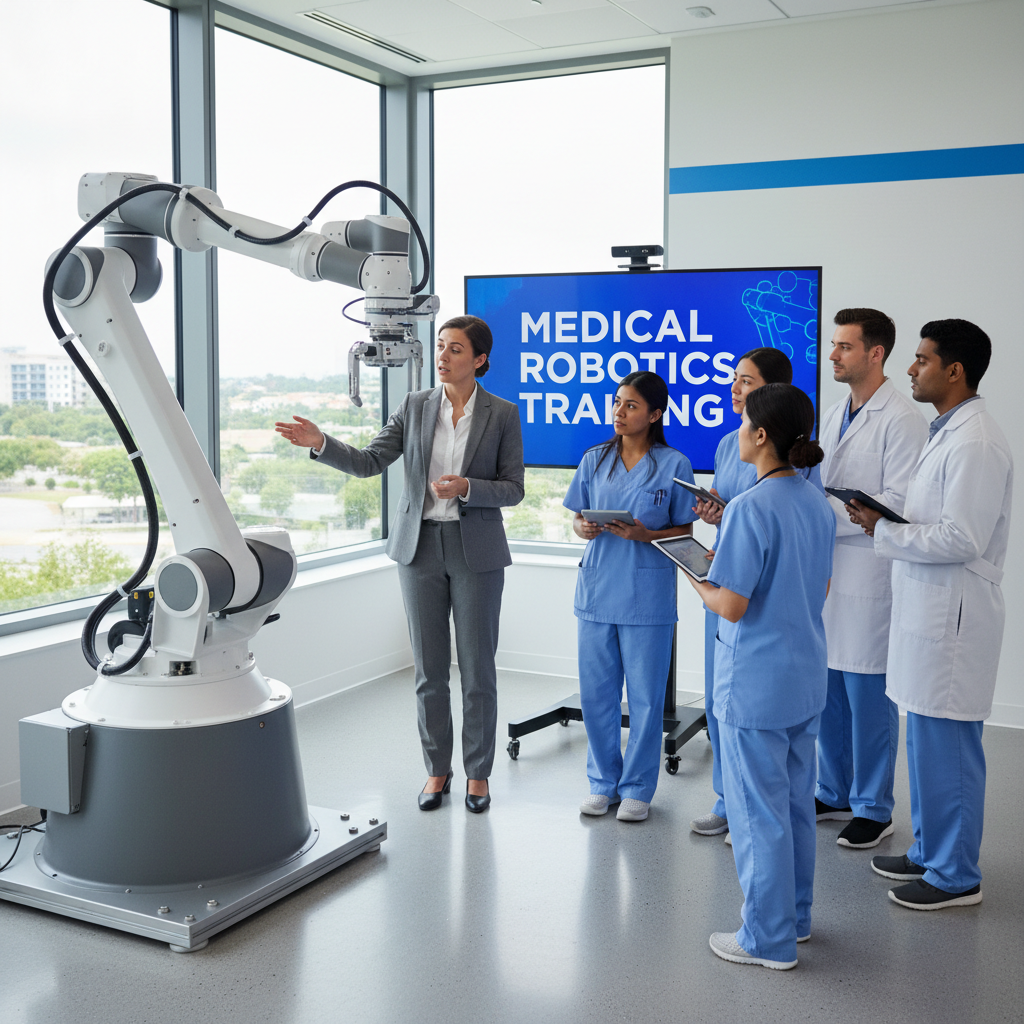
The technical success of robotic software integration is irrelevant if frontline staff view the technology with apprehension or resentment. Overcoming robot adoption healthcare staff resistance requires shifting the perception of the robot from a high-tech intruder to a helpful ward assistant. This shift is best achieved through transparent communication and a decentralized leadership model.
Identify Robot Champions within the ward early in the process. These are staff members who are tech-curious and can serve as the first point of contact for their peers. By involving these champions in the early phases of robotics integration services, you ensure that the deployment is guided by practical, on-the-ground insights. When a colleague demonstrates how a mobile unit saves them twenty minutes of manual haulage per shift, the message carries more weight than a directive from the board.
Training must move beyond generic onboarding videos. In Melbourne and across regional Victoria, clinical staff consistently report a preference for collaborative, face-to-face staff training and support. These sessions should focus on the practicalities of daily operations, such as:
Clearing a localized fault or "workflow cancelled" error without waiting for IT support.
Understanding sensor ranges to prevent accidental path blockage in narrow corridors.
Interacting with the interface to redirect a unit during an emergency.
Demystifying the hardware reduces intimidation. When a nurse knows exactly how to reset a unit or steer it manually if required, the machine becomes a tool they control rather than a liability they must avoid. This empowerment is the cornerstone of effective healthcare robotics adoption change management. It ensures that when the robot begins its first autonomous patrol, the ward is ready to welcome it as a productive member of the team.
Compliance and Safety as Adoption Drivers

Confidence in a new deployment is inextricably linked to the perception of safety and the rigor of regulatory compliance. In the Australian context, navigating Therapeutic Goods Administration (TGA) classifications and adhering to the NSW Health AI Framework are not just administrative hurdles; they are critical components of successful healthcare robotics adoption change management. Leadership teams must ensure that every autonomous unit meets local safety standards to alleviate clinical anxiety and patient concerns.
Specialized robotics integration services provide the necessary oversight to ensure that hardware and robotic software integration align with these national guidelines. Beyond mere compliance, automated units for facility inspections and security patrols offer a level of risk management that manual patrols cannot replicate. An autonomous robot generates a precise, timestamped audit trail of every corridor checked and every sensor reading taken. This data creates a transparent record for accreditation and insurance purposes, transforming the robot from a novelty into a reliable partner for maintaining high clinical and safety standards. Through professional staff training and support, operators learn to value this automated reporting as a shield against liability and a tool for consistent facility oversight.
How to Lead a Robotics Transformation in Your Facility
Effective healthcare robotics adoption change management requires a shift from viewing robots as stand-alone gadgets to treating them as a strategic workforce expansion. Leaders should follow a four-stage roadmap to ensure sustainable success:
Value Assessment: Identify high-volume, low-complexity tasks, such as specimen delivery or waste removal, to calculate potential ROI and labor hours reclaimed for clinical care.
Environmental Audit: Perform a rigorous technical scan of the facility to address Wi-Fi dead zones, lift connectivity, and physical navigation obstacles.
Pilot Program: Deploy a single unit with defined KPIs, measuring performance metrics like mission completion rates and staff sentiment.
Full Integration and Onboarding: Finalize robotic software integration with hospital systems and roll out structured staff training and support.
Exaptec serves as the bridge in this process, providing robotics integration services that manage technical complexities and regulatory compliance. This specialized oversight allows clinical leaders to focus on their primary mission: patient care. Moving into the 2026-2027 landscape, Australian facilities that adopt this structured approach will see robots not as novelties, but as indispensable members of the multi-disciplinary team.
Implementing robotics in healthcare is less about the machines and more about the people using them. Success depends on clear leadership and a culture that embraces change. If you want expert help streamlining this transition, we invite you to learn more About our mission and expertise. Navigating these technical shifts can be complex; however, the right guidance ensures your investment delivers lasting value to both staff and patients.