Strategic planning for robotic surgery Australia hospitals through 2027 involves a major expansion into public and regional sectors supported by state-funded investments in advanced surgical platforms. Successful facility integration requires addressing high equipment costs and data quality issues while focusing on improved patient outcomes for procedures such as prostate cancer treatment.
As hospital administrators across Australia look toward 2026, the primary challenge is no longer whether to adopt robotic assisted surgery, but how to integrate it without disrupting existing workflows or overextending capital budgets. Many facilities struggle with a fragmented landscape of legacy systems and siloed data; these hurdles often prevent the realization of a clear return on investment. Strategic planning requires a shift from viewing robotics as a niche clinical tool to recognizing it as a fundamental pillar of modern infrastructure. This guide provides a roadmap for the Australian healthcare sector, addressing the practicalities of bridging the urban and regional divide while meeting stringent TGA standards. You will learn how to optimize software integration, manage hospital wide change, and calculate the total cost of ownership to ensure your facility remains competitive and efficient through 2027.
The Evolution of Robotic Assisted Surgery in the Australian Healthcare Landscape
The landscape of robotic surgery in Australia hospitals is undergoing a fundamental transformation as we move into 2026 and 2027. What was once considered a niche, high cost experimental technology is rapidly becoming the standard of care for complex urological and gynaecological procedures. This transition is most evident in the public sector, where state governments are investing heavily to establish designated Centres of Excellence.
A prime example is the Western Australian Government’s five million dollar investment in advanced robotic systems at Fiona Stanley Hospital, marking a significant milestone for public healthcare in the West. Similar expansions across Queensland facilities illustrate a nationwide push to democratise access to robotic-assisted surgery (RAS). For procedures such as radical prostatectomies and nephrectomies, RAS is no longer an alternative; it is the benchmark.
However, achieving this standard requires more than just purchasing hardware. Successful facility planning involves robust custom software integration to ensure robotic platforms communicate with existing electronic health records, alongside stringent regulatory compliance support to meet TGA standards. Without these foundational elements, even the most advanced system risks underperformance. As facilities mature, the focus is shifting from basic acquisition to operational excellence and long term clinical governance. Understanding Why Healthcare Robotics Projects Fail is crucial for hospital boards looking to transition from early adoption to sustainable, high volume surgical programs.
Strategic Benefits: Beyond Clinical Outcomes for Hospital Leaders
For hospital executives and boards, moving from basic acquisition to operational excellence requires a clear understanding of the strategic dividends that extend far beyond the operating table. While improved patient outcomes are the primary driver, the most significant wins for robotic surgery Australia hospitals often lie in human capital and operational throughput. The ability to attract and retain top tier surgical talent is a critical factor. Surgeons entering the workforce in 2026 and 2027 view robotic proficiency as a core competency; facilities lacking these capabilities risk a talent drain to metropolitan private centres or better equipped public hubs.
Regional hospitals, such as those in Orange or Ballarat, are utilizing robotic assisted surgery (RAS) as a primary tool for equity and recruitment. By implementing these systems, regional facilities bridge the gap in specialist care accessibility, offering surgeons the same high tech environment they would find in Melbourne or Sydney. This geographic leveling is essential for maintaining a sustainable regional workforce and reducing the need for patient transfers.
From an operational standpoint, the impact on Average Length of Stay (ALOS) serves as a primary financial lever.
Strategic Metric | Operational Impact of RAS Integration |
|---|---|
Bed Capacity | Lower ALOS increases patient throughput and mitigates chronic bed block. |
Recruitment | Secures fellowships and specialists seeking advanced technical environments. |
Market Position | Establishes the facility as a 'Centre of Excellence' within the local health district. |
Maximizing these strategic wins requires more than just the robot. It necessitates custom software integration to track performance metrics in real time and regulatory compliance support to ensure the program meets evolving safety benchmarks. As highlighted in our analysis of Why Healthcare Robotics Projects Fail, neglecting the integration of these systems into the broader hospital workflow can quickly erode the intended ROI.
Bridging the Urban, Regional Divide in Robotic Surgery Access
Addressing the operational throughput described above is particularly urgent for facilities outside metropolitan hubs. In the context of robotic surgery Australia hospitals, the geographic divide remains a significant barrier to equitable care. Current data highlights a stark reality: while 29% of the Australian population resides in rural and regional areas, only 12% of surgical specialists practice there. This imbalance often results in regional patients facing up to three times the rate of preventable hospital admissions compared to their urban counterparts.
Implementing robotic assisted surgery (RAS) serves as a powerful tool for health equity, provided it is supported by regional specific funding models and training pipelines. Grampians Health in Ballarat stands as a successful case study, demonstrating that regional centers can achieve metropolitan standards of care and improve patient recovery times. By offering high tech environments, these facilities can effectively recruit and retain specialists who might otherwise remain in capital cities.
However, without a structured integration plan, these systems risk becoming 'expensive ornaments' rather than clinical assets. Successful regional adoption depends on several technical and operational pillars:
Dedicated state government grants to offset high initial capital expenditure.
Custom software integration that enables remote diagnostics and seamless EHR connectivity across districts.
Ongoing regulatory compliance support to maintain safety standards without requiring a large on site legal team.
Regional boards must look beyond the hardware acquisition. As discussed in our review of Why Healthcare Robotics Projects Fail, the absence of a long term operational strategy can stall a program before it achieves sufficient clinical volume. Ensuring that the technology is fully integrated into the local workforce's daily workflow is the only way to bridge the urban regional divide permanently.
Navigating Integration and Workflow Challenges in the Operating Theatre
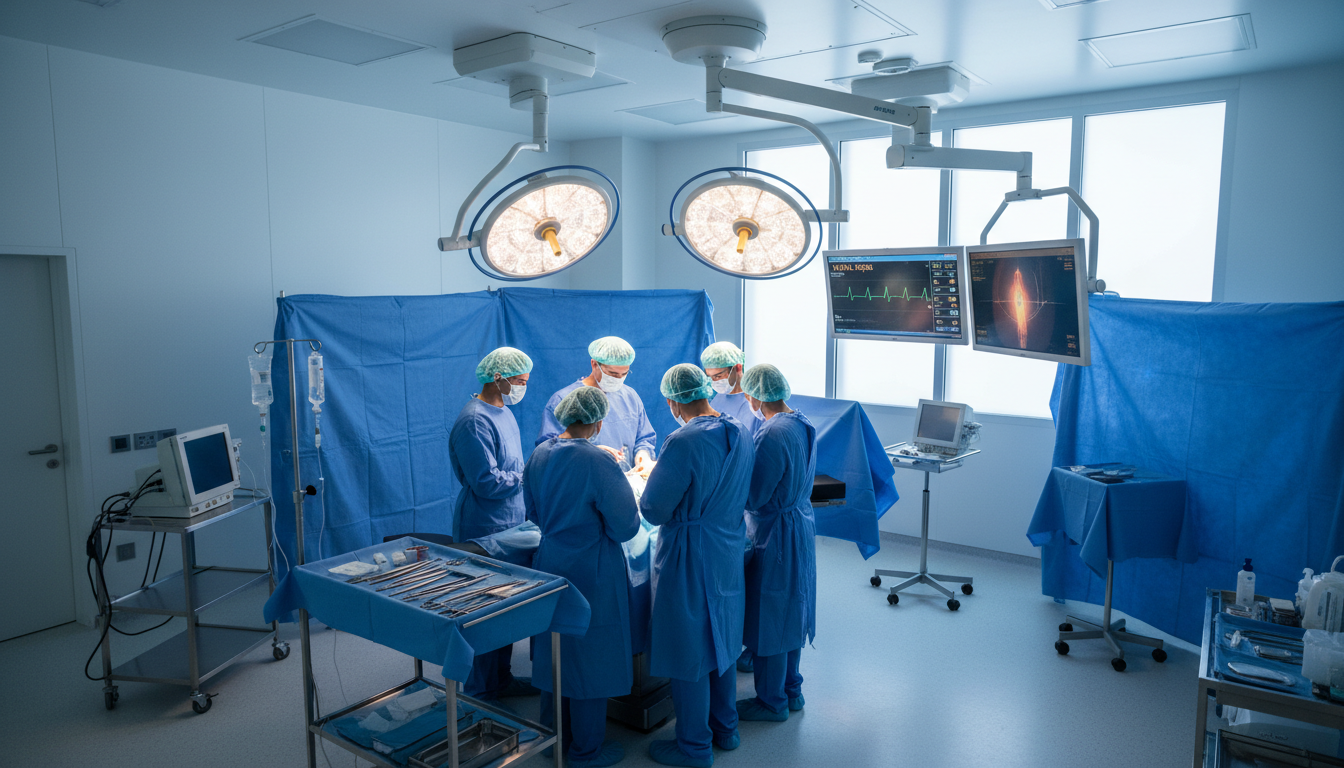
Moving from regional logistics to the theatre floor, the most common hurdle for robotic surgery Australia hospitals is not the technology itself, but the human workflow it disrupts. Integrating a robotic system fundamentally alters the safety culture of the Operating Room (OR). Because the lead surgeon is often physically separated from the patient at a console, traditional nonverbal cues and situational awareness are diminished. Research indicates that operational friction often stems from gaps in nontechnical skills, such as communication and team coordination, rather than technical surgical errors.
Workflow Element | Traditional Surgery | Robotic-Assisted Surgery |
|---|---|---|
Surgeon Positioning | Scrubbed at the table; direct tactile feedback. | Seated at the console; visual-dominant feedback. |
Team Communication | Direct line of sight; verbal and non-verbal. | Mediated; higher reliance on verbal clarity. |
Situational Awareness | Shared physical space around the incision. | Distributed; team manages patient and robotic arms. |
Hospital leaders should move beyond individual surgeon certification and focus on team-based simulation training. This holistic approach ensures that nursing staff, anaesthetists, and assistants are as proficient in the system's nuances as the clinician. A comprehensive workflow audit is essential to identify bottlenecks in setup, instrument turnover, and emergency undocking procedures. Neglecting these human factors is a primary reason Why Healthcare Robotics Projects Fail. Technical environments must support this new workflow through custom software integration and regulatory compliance support to ensure clinical governance remains robust throughout the program's expansion.
Software Integration and Data Quality: The Technical Foundation

The technical infrastructure underpinning robotic surgery Australia hospitals is often an afterthought, yet it is the primary determinant of long term scalability. A surgical robot is, at its core, a sophisticated data generator and processor. If the system remains siloed from the hospital's Electronic Health Record (EHR) or Electronic Medical Record (EMR), its utility is severely capped. Strategic planning for 2026 and 2027 requires custom software integration that ensures telemetry and surgical outcomes flow directly into the patient's record, enabling a single source of truth for clinical decisions.
Data quality is the fuel for the next generation of surgical AI. Emerging platforms are beginning to provide intraoperative guidance and predictive analytics, but these features rely on clean, structured data sets. Facilities that neglect their digital foundations now will find themselves unable to adopt AI driven enhancements later.
Technical Component | Integration Priority | Impact on Facility ROI |
|---|---|---|
EHR Interoperability | High | Automated documentation and billing accuracy. |
Real-time Telemetry | Medium | Predictive maintenance and system uptime. |
Cloud Analytics | High | Benchmarking surgical performance against global standards. |
Preparing for this shift involves more than just cabling. It requires robust regulatory compliance support to manage data privacy and cybersecurity risks associated with networked medical devices. As explored in our analysis of Why Healthcare Robotics Projects Fail, technical debt and poor data interoperability are silent killers of robotic programs. Leaders must ensure their IT infrastructure can support the high bandwidth and low latency requirements of modern robotic platforms today to avoid costly retrofits tomorrow.
Staff Training and Change Management for Hospital Wide Adoption
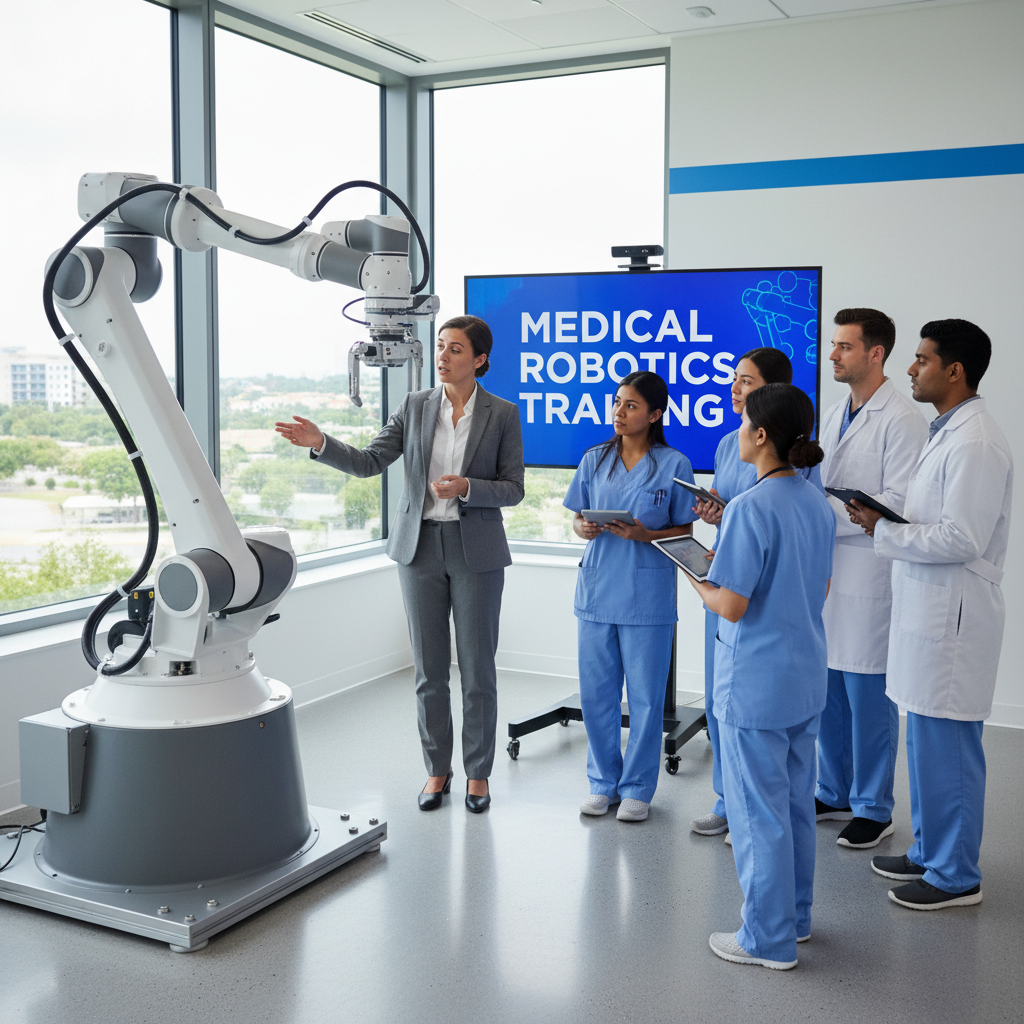
Transitioning from technical infrastructure to operational readiness requires a shift in focus toward the human element. For robotic surgery Australia hospitals, the Australian Medical Robotics Academy (AMRA) provides an essential foundation for clinical proficiency, yet successful long term adoption requires training that extends far beyond the lead surgeon. A high functioning program treats every stakeholder as a specialist. This includes nursing staff mastering rapid docking protocols, sterilization technicians managing complex instrument reprocessing, and facility maintenance engineers understanding the physical and electronic architecture of the system.
Building this internal expertise requires a culture of continuous learning rather than a one-off orientation. Exaptec facilitates this transition by providing specialized staff training for advanced robotics, acting as a bridge between high level acquisition and daily operational fluency. We ensure that non-clinical staff are prepared to manage the custom software integration and logistics that underpin the surgical workflow. By aligning the entire team, facilities can maintain the high safety standards required for regulatory compliance support and avoid the common pitfalls of fragmented implementation described in our analysis of Why Healthcare Robotics Projects Fail. A robotic system is only as effective as the collective team supporting it.
Regulatory Compliance and TGA Standards for Surgical Robots

Building on the foundation of a trained workforce, hospital leaders must anchor their programs in the rigorous framework of the Therapeutic Goods Administration (TGA). In Australia, surgical robots are generally classified as high risk medical devices, necessitating strict adherence to the Australian Register of Therapeutic Goods (ARTG) entries. For robotic surgery Australia hospitals, the oversight role of the facility leader is a permanent commitment to clinical governance rather than a procurement milestone.
Compliance involves a continuous lifecycle of post market surveillance and diligent medical device reporting (MDR). This includes managing software patches and updates, where custom software integration must be carefully mapped against the device’s original TGA certification to avoid unintended non-compliance. Establishing internal protocols for reporting adverse events or near misses is essential for maintaining patient safety and legal standing. As we highlight in Why Healthcare Robotics Projects Fail, treating regulatory alignment as a static checkbox often leads to operational stalling. Robust regulatory compliance support ensures that as the technology evolves, the facility's governance framework evolves alongside it.
Total Cost of Ownership and ROI Considerations for 2027
Evaluating the financial viability of robotic surgery Australia hospitals requires a shift from viewing the initial $5 million capital outlay as a standalone cost to analyzing the Total Cost of Ownership (TCO) over a seven to ten year lifecycle. Beyond the acquisition, facilities must budget for annual maintenance contracts, which often range from $150,000 to $200,000, and the per-procedure cost of specialized consumables.
Regarding the common inquiry of how much a robotic prostatectomy costs in Australia, the answer depends on the funding model. In the public system, these procedures are increasingly covered by state government grants, such as the recent $5 million investment at Fiona Stanley Hospital, removing the out of pocket burden for patients. Conversely, in private facilities, patients may face gaps between $10,000 and $25,000 depending on their insurance and the surgeon's fees.
The true ROI manifests in operational throughput. By reducing surgical complications and shortening recovery times, hospitals can see a significant decrease in the cost per episode of care.
Cost Variable | Financial Impact | Long-term Strategy |
|---|---|---|
Capital Outlay | $5M+ per system | Offset by state grants or private volume. |
Maintenance | $150k to $200k annually | Managed through regulatory compliance support. |
Consumables | $2k to $5k per case | Optimised via custom software integration. |
To prevent these costs from ballooning, leaders must avoid the pitfalls identified in Why Healthcare Robotics Projects Fail, specifically underestimating the recurring operational expenses needed to maintain clinical excellence.
Successfully integrating robotic surgery into Australian hospitals requires detailed long-term planning and strategic alignment. Selecting the right technology while preparing your facility for future demands is the foundation of modern care. If you find these logistics complex or simply want to ensure your strategy is sound, we can assist you. Our team provides a range of professional Services tailored to the unique needs of healthcare facilities. By partnering with experts, you can navigate this transition smoothly and enhance patient outcomes through innovative surgical solutions.