Healthcare robotics after hours Australia aged care systems provide essential support during holiday surges by automating routine monitoring and administrative tasks when staffing levels are low. These technologies ensure facilities remain compliant with 24/7 registered nurse requirements; they offer a reliable way to maintain high standards of care without overextending the existing workforce during peak periods.
The holiday season often amplifies the persistent pressure on Australian aged care facilities; particularly when trying to maintain strict 24/7 Registered Nurse requirements and mandatory care minutes. With staff taking well deserved breaks, the after hours gap becomes a significant risk for operational continuity and resident safety. Robotics offers a sophisticated, practical solution to bridge these staffing shortages without compromising on the quality of care. This article examines how autonomous systems can support night shifts through security patrols and telepresence capabilities. You will learn about navigating Victorian regulatory frameworks, implementing automation safely, and preparing your facility for the evolving landscape of 2026. By integrating smart technology today, providers can ensure consistent oversight and family connectivity during the busiest times of the year; transforming a seasonal challenge into a long term operational advantage.
The Christmas Staffing Squeeze in Australian Healthcare
The December to January window in Australia presents a unique logistical challenge for healthcare administrators. While much of the country enters a period of rest, hospitals and aged care facilities face a double whammy. Permanent staff require well earned annual leave to avoid burnout; yet, facilities often see a surge in demand due to seasonal visitors, holiday related incidents, and the persistent needs of an aging population. This pressure is exacerbated by research indicating that 139,000 aged care workers may leave the sector by 2026, a statistic that highlights the fragility of our current workforce model.
Historically, the industry has turned to agency and contract nursing to fill these gaps. However, during the Christmas peak, these options become prohibitively expensive and increasingly scarce. Relying solely on a revolving door of high cost contract staff is no longer a sustainable way to maintain the healthcare robotics ROI Australia facilities need for long term financial stability.
This is where automation serves as a strategic force multiplier. At Exaptec, we view robotics not as a replacement for the essential human touch of a Registered Nurse, but as a way to offload the repetitive, logistical burdens that drain a skeletal holiday crew. By utilizing custom software integration to sync autonomous systems with existing facility workflows, providers can protect their human capital. This approach ensures that the healthcare robotics after hours Australia aged care facilities implement actually supports the staff on the floor, allowing them to focus on clinical outcomes rather than delivery tasks or routine perimeter checks. If your facility is planning for the upcoming peak, you can contact our Melbourne team to discuss integration timelines.
Meeting the 24/7 RN Requirement and Care Minutes During Off-Peak Hours
The regulatory landscape for Australian aged care providers has shifted significantly, with the Department of Health now mandating a 24/7 Registered Nurse (RN) presence and specific care minutes targets. These targets are not merely suggestions; they are rigorous performance metrics that become increasingly difficult to hit during the Christmas surge when the workforce is at its leanest. The primary challenge for facility managers is not just having staff on the clock, but ensuring that those staff members are actually performing direct clinical care rather than being diverted by logistical friction.
In a traditional overnight or holiday shift, a high percentage of a nurse's time is consumed by non-care activities. These include transporting soiled linen, delivering late-night meal trays, or conducting repetitive floor checks. When a facility utilizes healthcare robotics after hours Australia aged care providers find that they can effectively protect their care minutes. By deploying Autonomous Mobile Robots (AMRs) to handle the heavy lifting and routine movement of goods, the RN on duty is liberated from manual labor.
Task Category | Manual Handling (Pre-Robotics) | Robotic Integration (Exaptec) |
|---|---|---|
Linen & Waste | Staff transport trolleys manually | AMRs autonomously transport bins to docks |
Meal Delivery | Nurses leave wards to fetch trays | AMRs deliver trays to specific nurse stations |
Facility Patrols | RN or PCA walks perimeter | AMR conducts sensor-based inspections |
This strategic shift ensures that every minute of a Registered Nurse’s time is applied to resident clinical outcomes. Through custom software integration, these robots communicate directly with existing facility management software or staff mobile devices. This connectivity means that a robot is only moving when and where it is needed, preventing the dilution of care minutes by administrative or logistical burdens. For Melbourne facilities operating with a skeletal crew, this automation is the difference between simply meeting a mandate and providing high-quality, attentive care during the most demanding time of the year.
Autonomous Security Patrols: Enhancing Night Shift Safety

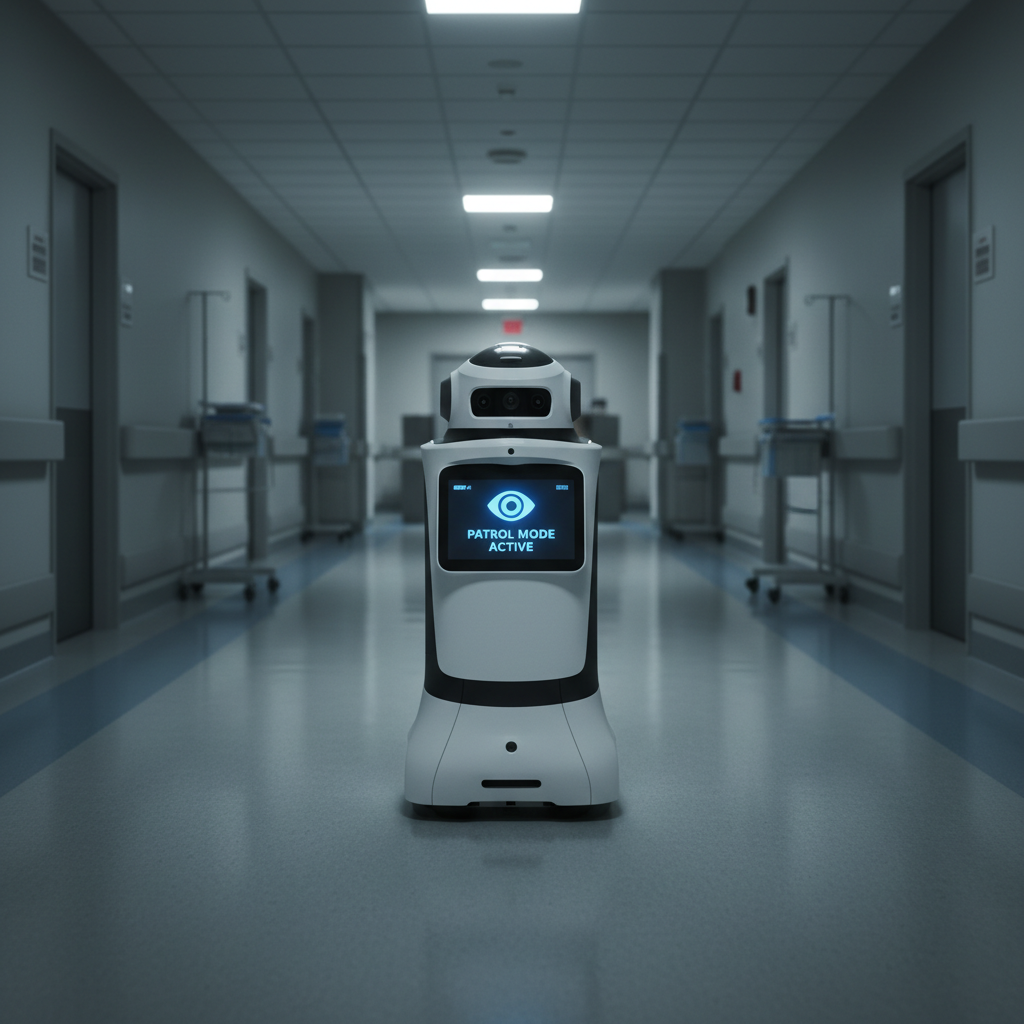
Maintaining safety on a large hospital campus or aged care site in Melbourne becomes significantly more complex when staffing levels drop over the Christmas break. While traditional security might rely on stationary cameras or infrequent manual rounds, autonomous mobile robots (AMRs) provide a continuous, proactive presence. These units are equipped with sophisticated sensors and vision systems designed to detect environmental hazards that could lead to accidents or regulatory breaches.
During an overnight shift, an AMR can autonomously navigate through corridors to identify risks such as liquid spills, which pose a high fall risk to elderly residents, or fire doors that have been left propped open. Because these robots operate 24/7 without fatigue, they ensure that the physical environment remains compliant and safe even when the human supervisor is occupied with resident care.
The true value of healthcare robotics after hours Australia aged care facilities require lies in how the data is communicated. Exaptec differentiates its approach through custom software integration that connects the robot’s sensors directly to the handheld devices carried by the nursing or facility team. Instead of requiring someone to monitor a video feed, the system pushes real-time alerts only when a deviation is detected, such as an unauthorized person in a restricted wing.
For Melbourne facilities with sprawling footprints, this targeted notification system allows a minimal holiday crew to maintain total site awareness without leaving their post. This focused application of technology ensures a high healthcare robotics ROI Australia by preventing incidents before they escalate into costly emergencies. If you are looking to secure your facility's perimeter during the upcoming surge, contact our Melbourne team to explore our mobile sensing solutions.
Telepresence Robots: Bridging the Distance for Families and Specialists
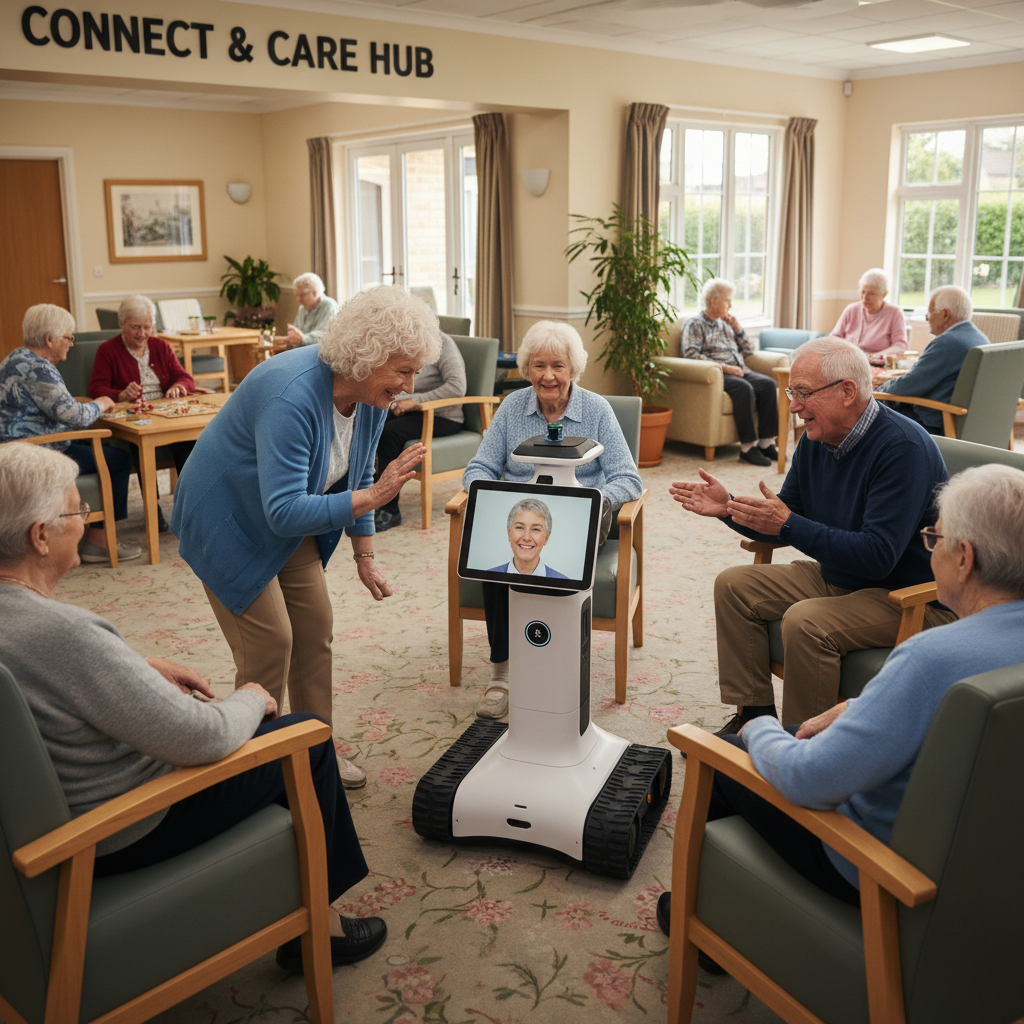
While autonomous security monitors the physical plant, telepresence robots address the human isolation often felt during the Australian summer holidays. For residents in aged care, the staffing squeeze isn't just a logistical hurdle; it is an emotional one. Families are frequently traveling interstate or situated overseas during the December period, making physical visits impossible. Unlike stationary tablets that require a staff member to hold the device or prop it up, a mobile telepresence robot allows the visitor to independently navigate the facility. A daughter in Perth can "walk" with her father to the garden or join the communal lounge for a Christmas event, providing a sense of agency and immersive presence that a fixed screen fails to provide.
From a clinical perspective, these units serve as a vital link for after-hours specialist care. During the holiday surge, senior clinicians are often off-site, and bringing them in for routine consultations is both costly and slow. Through custom software integration, specialists can remotely log into a mobile unit to conduct virtual ward rounds or perform remote patient monitoring from their own homes. This ensures that clinical decisions are made by the most qualified person without requiring their physical presence on the floor, preserving their ability to rest while maintaining a high standard of care.
By deploying healthcare robotics after hours Australia aged care facilities can effectively bridge the distance between residents, their families, and their clinicians. This application significantly bolsters the healthcare robotics ROI Australia by reducing the necessity for expensive emergency call-outs and improving resident mental health outcomes. If your facility requires a more connected way to manage specialist access this festive season, contact our Melbourne team to explore telepresence hardware and software solutions.
Implementing Robotics Safely: Training and Regulatory Compliance in VIC

Successfully deploying healthcare robotics after hours Australia aged care facilities require involves much more than unboxing hardware. In our experience, purchasing the robot represents only about 20% of the total solution. The remaining 80% encompasses strategic workflow design, hands on staff education, and strict adherence to Victorian health standards. A skeletal night crew, already managing high resident needs during the Christmas surge, cannot be expected to troubleshoot a machine that feels like a burden rather than a tool.
Exaptec focuses on practical, site specific training that empowers the nurses and care assistants on duty. This includes structured sessions where staff learn to interact with AMRs, manage task queues via mobile devices, and safely manually override paths during clinical emergencies. Beyond the human element, safety and regulatory compliance are non negotiable. We navigate the complexities of Australian safety codes and Victorian Occupational Health and Safety (OHS) regulations to ensure that autonomous units operate without risk to residents or existing facility infrastructure.
Through custom software integration, we establish digital guardrails that keep the robot compliant with specific facility protocols and floor load requirements. This local expertise protects the healthcare robotics ROI Australia by preventing deployment failures or regulatory friction. For providers in Victoria looking to ensure their automation is both legal and functional before the holiday peak, you can contact our Melbourne team to discuss our compliance and training frameworks.
The 2026 Outlook for Australian Healthcare Automation
The trajectory for Australian healthcare is moving rapidly toward Physical AI, where autonomous systems do not just process data but interact physically with the clinical environment. This shift is a necessary response to the 2026 outlook, where the projected loss of 139,000 aged care workers will make the December to January window increasingly precarious for site managers. Facilities that initiate their robotics journey now will be the most resilient during the 2026 and 2027 holiday closedown periods, having already moved past the initial learning curve into stable, optimized workflows.
By embedding healthcare robotics after hours Australia aged care providers can fundamentally change the experience for nurses working the Christmas shift. The objective is to create a supported environment where the physical and mental load is shared with automation. This reduces the late shift burnout that leads to long term staff turnover, directly improving the healthcare robotics ROI Australia by preserving the existing workforce. As these systems become more sophisticated through custom software integration, they will transition from being novel tools to essential facility infrastructure. To begin building this resilience before the next major staffing crunch, contact our Melbourne team to discuss a multi year automation roadmap.
Managing the holiday surge in aged care requires a strategic balance between staff well-being and resident safety. Robotics provide a reliable solution for after-hours support, helping facilities navigate these busy periods with greater efficiency and care. If you want expert help selecting and deploying the right technology for your specific needs, our team is here to guide you through the transition. You can learn more about Exaptec and our commitment to healthcare innovation to see how we can support your facility today.