Healthcare robotics interoperability Australia relies on the adoption of standardized protocols like HL7 FHIR and SDC to enable seamless data exchange between robotic systems and clinical infrastructure. By aligning with national digital health standards, healthcare providers can ensure secure, real-time communication that enhances patient safety in high-acuity environments such as operating rooms and intensive care units.
Deploying a single service robot is a significant milestone; however, scaling a fleet within a complex Australian healthcare environment often reveals a critical bottleneck. Without true interoperability, these machines remain expensive silos that fail to communicate with electronic medical records or building management systems. As the demand for automated logistics and clinical support intensifies, the ability to integrate diverse robotic platforms into existing workflows determines the ultimate success of the technology. It is no longer sufficient for a robot to simply navigate a corridor. It must synchronize with the broader digital ecosystem to provide measurable clinical value. This guide explores the four levels of medical robotics interoperability, focusing on the adoption of HL7 and FHIR standards within the Australian landscape. We examine how to bridge the gap between cloud-based management and local infrastructure, while addressing the integration challenges in aged care and the requirements for cybersecurity compliance.
The Current State of Healthcare Robotics Interoperability in Australia

The Australian healthcare landscape is undergoing a significant digital transformation, underpinned by the National Healthcare Interoperability Plan 2023 to 2028. As hospitals across Melbourne and wider Australia increasingly deploy Autonomous Mobile Robots (AMRs) for logistics and telepresence robots for specialist consultations, a critical challenge has emerged. While these machines excel at navigating physical environments, they frequently operate within data silos. This means the valuable telemetry and event data they generate remain trapped within proprietary vendor platforms, disconnected from the broader clinical ecosystem.
In the context of healthcare robotics interoperability Australia, the objective extends far beyond a robot moving safely from point A to point B. True interoperability is the outcome achieved when a robot can exchange meaningful, real-time data with a facility’s Electronic Medical Record (EMR) and Patient Administration Systems (PAS). For example, a successful integration ensures that when a telepresence robot facilitates a specialist rounding session, the event is automatically logged in the patient's digital record rather than requiring manual entry by nursing staff.
The Australian Digital Health Agency (ADHA) is instrumental in setting the expectations for this connected future. Their framework emphasizes that technology must support a seamless flow of information across the care continuum. For healthcare providers, meeting these standards requires custom software integration services that bridge the gap between robotic hardware and clinical workflows. By moving away from isolated solutions, facilities can ensure that robotic fleets contribute to a unified data environment, enhancing both operational efficiency and clinical safety.
The Four Levels of Interoperability for Medical Robotics
To move beyond data silos, we must address healthcare robotics interoperability Australia through a four-tiered framework: foundational, structural, semantic, and organisational. Each level presents unique challenges for autonomous and telepresence systems operating in complex clinical environments.
Foundational interoperability constitutes the baseline physical connection. In a Victorian hospital or aged care facility, this involves the robot’s ability to maintain a stable, secure handshake with high-density Wi-Fi networks as it navigates between wards. If the foundational layer is weak, a telepresence robot may lose its video stream in a signal dead zone, or an AMR might fail to receive a priority dispatch command from the pharmacy. This level is about the reliable movement of bits and bytes across the local infrastructure.
Structural interoperability defines the syntax of the data exchange. This level ensures that the robot and the hospital infrastructure share a common message format, typically adhering to HL7 standards. When a robot transmits its current coordinates or a mission completion timestamp, the structural layer dictates how that data is packaged. This ensures the receiving server knows exactly where to find the "location" or "status" fields within the data packet without manual reconfiguration.
Semantic interoperability is where the robotic context becomes critical. It ensures that the specific meaning of the data is preserved and understood across different systems. For example, if an AMR triggers a "low battery" alert, the facility management software must interpret this as an actionable maintenance event rather than a generic system error. Similarly, a telepresence session must be interpreted as a distinct clinical encounter that maps correctly to patient records. Achieving this level of precision often requires custom software integration services to translate proprietary robotic telemetry into standardised medical terminology.
Organisational interoperability focuses on the highest level: the workflow and policy layer. It addresses how robotic data supports clinical decisions and daily hospital operations. This involves aligning the robot's tasks with staff rotations, patient consent models, and cross-departmental protocols. To explore how these levels apply to your specific facility, you can contact our robotics integration specialists to discuss a technical assessment of your current infrastructure.
HL7 and FHIR Standards for Robotic Integration
The shift toward more robust healthcare robotics interoperability Australia relies heavily on the technical evolution from legacy messaging to modern web standards. For decades, Health Level Seven (HL7) Version 2 was the industry workhorse, relying on rigid, pipe-delimited messages to push data between systems. However, as robotic fleets expand in Melbourne hospitals, the limitations of this push-only legacy approach have become apparent. Today, the Australian Digital Health Agency and the broader industry are transitioning toward Fast Healthcare Interoperability Resources (FHIR).
A common point of confusion for facility managers is the difference between HL7 and FHIR. Put simply, HL7 is the global non-profit organization that develops standards, while FHIR is their latest, web-based framework. Unlike older protocols, FHIR utilizes RESTful APIs, which allows robots to interact with hospital data much like a modern smartphone app interacts with a cloud service. This makes robotic fleet orchestration significantly easier for Melbourne hospital IT teams, as they can leverage familiar web technologies rather than specialized, legacy healthcare interfaces.
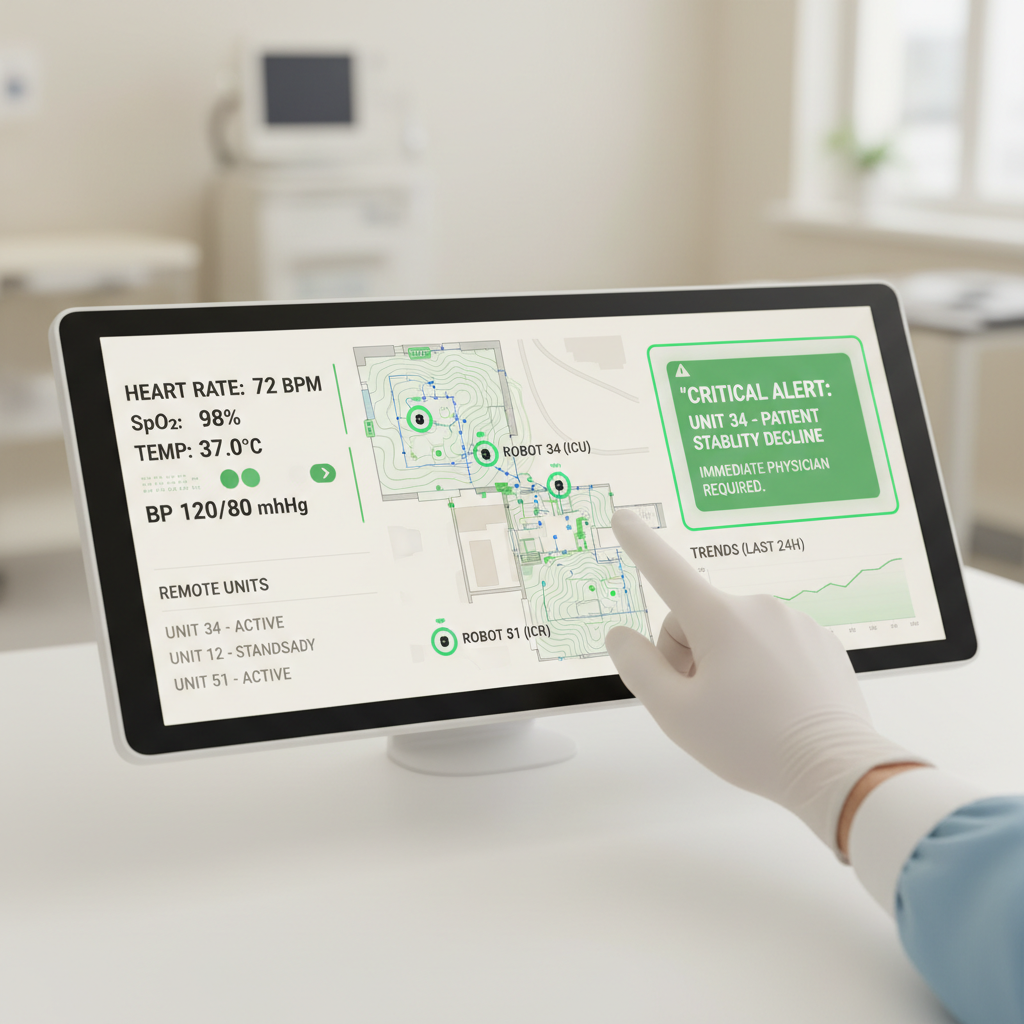
The practical application of FHIR in robotics is transformative. By utilizing AU Core standards, a telepresence robot can query the Patient Administration System (PAS) to pull real-time patient location data, ensuring the specialist is directed to the correct bed without manual staff intervention. Conversely, after a consultation, the robot can push a structured session summary directly to the patient’s My Health Record via the national sharing services. This creates a bi-directional flow of information where the robot acts as an active participant in the clinical workflow rather than an isolated hardware tool.
Standard | Architecture Type | Robotics Application | Data Exchange Method |
|---|---|---|---|
HL7 v2 | Message-based | Trigger-based status updates | Point-to-point pipes |
FHIR | Resource-based | Real-time API queries for patient data | RESTful API (JSON/XML) |
Implementing these standards requires a deep understanding of both robotic telemetry and Australian healthcare data requirements. Exaptec provides custom software integration services to help facilities map proprietary robotic data to these national standards. By aligning with FHIR early, Victorian hospitals ensure their robotic investments remain compatible with future federal mandates, such as the Sharing by Default initiatives outlined in recent legislative updates. To discuss how your existing infrastructure can support these advanced protocols, contact our robotics integration specialists for a detailed technical consultation.
Bridging the Gap between Robot Clouds and Hospital Infrastructure
A significant technical hurdle for Victorian healthcare providers is the "black box" nature of proprietary robotic clouds. While a manufacturer might offer a sleek dashboard for fleet management, the underlying telemetry often resides on global servers, making it inaccessible for real-time local integration. Bridging this gap requires a dedicated integration layer that sits between the robot’s external cloud and the hospital’s on-premise or private cloud infrastructure.
This integration layer functions as a secure gateway, facilitating the translation of telemetry from vendor-specific APIs into a format usable by local hospital systems. Without this bridge, critical information such as the real-time physical location of an AMR or the operational status of a telepresence unit remains siloed. Exaptec provides custom software integration services to build these gateways, ensuring that data flow is bi-directional and compliant with the Victorian Protective Data Security Framework (VPDSF).
For Melbourne hospitals, this often involves establishing a middleware solution that sanitizes and filters data before it enters the clinical network. This architecture allows IT teams to bypass the limitations of vendor clouds, enabling more robust healthcare robotics interoperability Australia by providing local control over data residency and system triggers.
Integration Component | Technical Function | Clinical Value |
|---|---|---|
Secure Gateway | Authenticated handshake between cloud and LAN | Protects the internal network from external vulnerabilities |
Middleware | Normalises proprietary data strings | Converts raw robotic telemetry into FHIR-ready resources |
Local Broker | Manages on-site message queuing | Maintains robot functionality during external internet outages |
By moving away from total reliance on external clouds, facilities gain the oversight necessary to treat robots as integrated clinical tools rather than isolated appliances. To discuss how to integrate your specific robotic fleet with local hospital infrastructure, contact our robotics integration specialists for a technical review of your site’s connectivity requirements.
Interoperability in Aged Care: Beyond the Hospital Ward
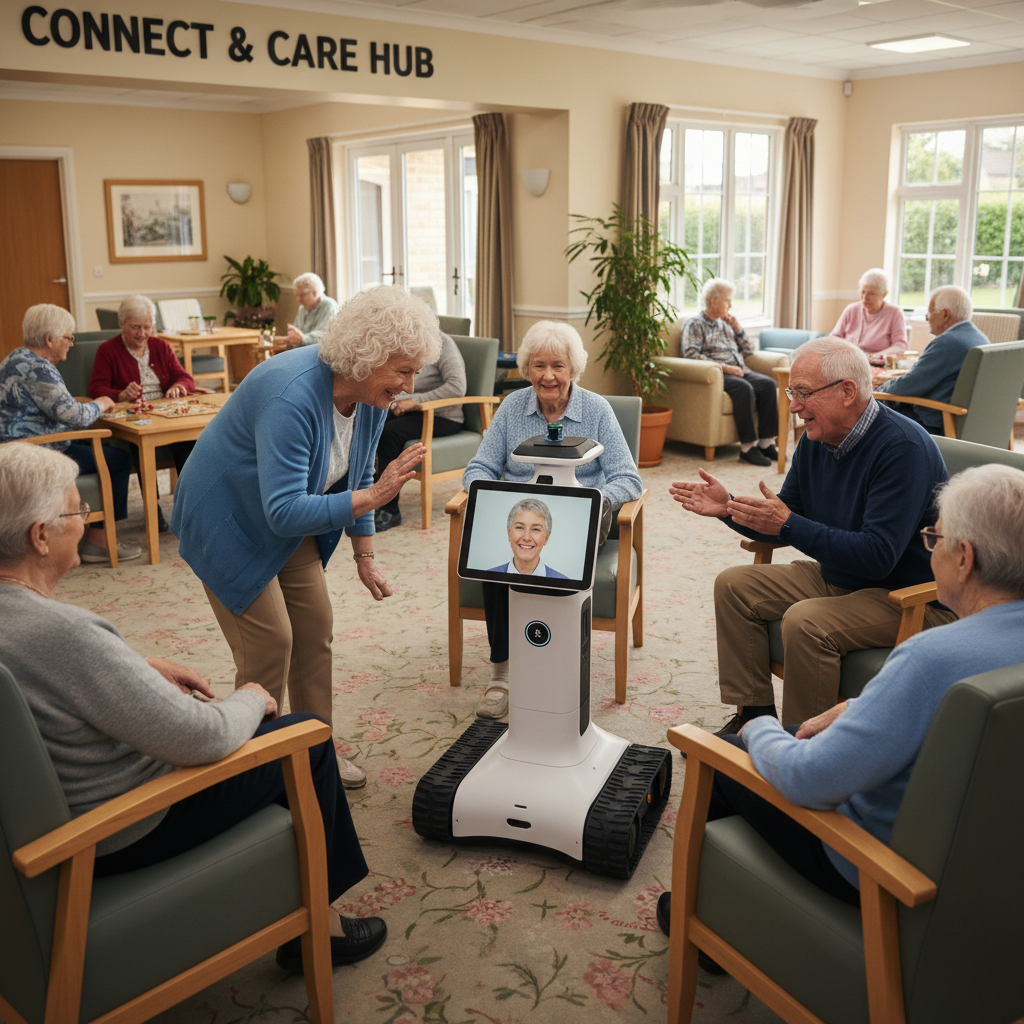
While acute hospitals focus on logistics and diagnostic speed, the aged care sector requires a different approach to healthcare robotics interoperability Australia. Here, the emphasis shifts toward resident safety, social engagement, and long term care management. The National Digital Health Strategy 2023 to 2028 specifically identifies aged care digital maturity as a priority, aiming to ensure that technology supports the well being of residents rather than adding to the administrative burden of care staff.
In a residential facility, telepresence robots act as conduits for both clinical consultations and family connection. To be truly effective, these sessions should not exist in isolation. Through custom software integration services, robotic platforms can interface directly with aged care management software such as Telstra Health. This allows for the automated logging of specialist consults and social visits directly into the resident’s progress notes without requiring manual data entry.
Data Type | Integrated Outcome | Staff Benefit |
|---|---|---|
Specialist Telepresence | Auto-logs duration and participant IDs | Eliminates manual transcription of visit times |
Resident Welfare Check | Updates safety monitoring dashboards | Provides real time oversight of room visits |
Social Engagement | Tracks frequency of family interactions | Identifies residents at risk of social isolation |
By automating these data flows, facilities can capture high quality evidence of care that meets Aged Care Quality Standards. Integrated data provides a clearer picture of a resident’s social health, allowing clinicians to see if a resident has lacked engagement without searching through multiple paper logs. This connectivity ensures the robot is an active part of the care team rather than a standalone gadget. To explore how to align your facility’s robotic fleet with current digital health frameworks, you can contact our robotics integration specialists for a detailed technical consultation.
Cybersecurity and Compliance for Connected Robotics
As robotic systems become more integrated, the attack surface within a healthcare facility inevitably expands. For every point of connectivity created to achieve healthcare robotics interoperability Australia, a new potential vulnerability is introduced. To mitigate these risks, Victorian hospitals must align their deployments with the Therapeutic Goods Administration (TGA) guidance on medical device cybersecurity. This framework emphasizes that security is not a post-deployment patch; it is a fundamental requirement of the entire device lifecycle.
A "security by design" approach ensures that patient privacy is never sacrificed for the sake of data flow. This is particularly critical when robots handle sensitive Identifiers, such as the Individual Healthcare Identifier (IHI). Secure integration requires that these identifiers are encrypted both at rest and in transit, with access governed by granular identity and access management (IAM) protocols. Exaptec provides custom software integration services to ensure these security layers are embedded within the communication protocols between the robot and the hospital’s core systems.
Compliance Pillar | Australian Requirement | Robotic Application |
|---|---|---|
Data Residency | Sovereign hosting (AU-based) | Telemetry and clinical logs must remain in Australia |
Identity Management | IHI Secure Handling | Mapping robot sessions to verified patient identifiers |
TGA Cybersecurity | Total Lifecycle Management | Regular patching of robotic operating systems and gateways |
Furthermore, any integration layer or software-based medical device must meet strict Australian data residency standards. Clinical data generated by robots, including specialist video streams or patient telemetry, should reside on Australian servers to comply with the Privacy Act 1988 and state-specific health records legislation. To verify that your robotic fleet meets these rigorous compliance and security standards, contact our robotics integration specialists for a comprehensive risk assessment of your facility’s digital infrastructure.