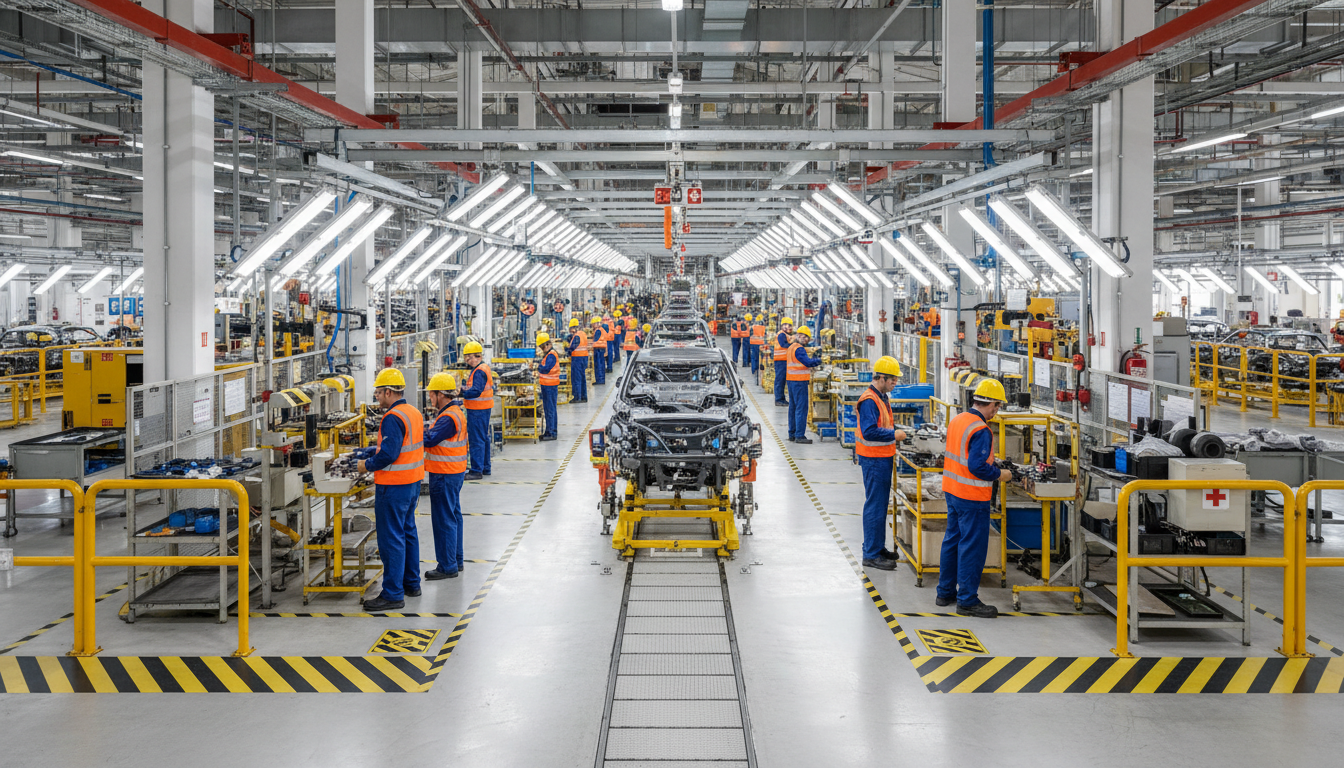
Mobile robot safety standards Australia healthcare compliance centers on the adoption of ISO 3691-4 and ANSI/RIA R15.08 frameworks to ensure safe autonomous navigation in clinical environments. These updated 2026 guidelines require strict adherence to performance levels and environmental zone management to protect patients and staff. Following these global standards helps Australian medical facilities mitigate risks while addressing workforce shortages through robotic integration.
Integrating mobile robots into high-traffic Australian healthcare environments presents a complex regulatory challenge that often leaves facility managers grappling with ambiguity. The transition toward 2026 safety compliance requires more than just procurement of advanced hardware; it demands a sophisticated understanding of how autonomous systems navigate the unpredictable nature of hospitals and aged care facilities. As WHS duty of care obligations become increasingly stringent, failing to align with international frameworks like ISO 3691,4 and ANSI R15.08,1 creates significant legal and operational exposure. This guide offers a practical, expert roadmap for navigating these evolving requirements. You will learn about the core safety frameworks governing mobile robotics, specific risk considerations for public-facing corridors, and the essential steps for conducting a robust site-specific risk assessment. We also explore the critical role of staff training in ensuring robotics integration remains both compliant and safe.
The Evolution of Mobile Robot Safety Standards in Australia
The Australian robotics landscape is undergoing a significant transition. Historically, mobile robots were confined to fenced-off industrial zones, governed by legacy standards such as EN 1525. However, as Autonomous Mobile Robots (AMRs) migrate into public-facing environments like hospitals and schools, these older frameworks no longer suffice. We are seeing a global shift toward ISO 3691:4 and ANSI R15.08, which provide more rigorous requirements for obstacle detection and autonomous navigation.
Distinguishing between hardware types is the first step in Exaptec robotics integration. Industrial Mobile Robots (IMRs) fall under ANSI R15.08, focusing on platforms with payloads used by trained staff. Conversely, service robots, specifically those providing personal care or physical assistance, are governed by ISO 13482. In a Victorian aged care facility, a robot might fit into both or either category depending on its primary function, necessitating a nuanced approach to safety.
While international benchmarks provide the technical foundation, Australian facilities must map these requirements directly to the Model WHS Act. A robot is legally classified as "plant" in Australia; therefore, regulatory compliance support must account for the specific duty of care owed to non-workers, such as patients and students. This regulatory pressure is mounting as the projected 2026 workforce shortage drives rapid AMR adoption across Victoria and the broader Australian healthcare sector. Facilities are deploying robots not just for efficiency, but to bridge critical labor gaps, making the mastery of mobile robot safety standards Australia healthcare essential for long-term operational viability.
Core Frameworks: ISO 3691,4 and ANSI R15.08,1 Explained
ISO 3691:4 represents the most rigorous international benchmark for the safety functions of driverless industrial trucks. This standard mandates that a robot must possess Performance Level d (PLd) rated systems for personnel detection and fault monitoring. A critical component of this framework is the three zone management system, which dictates how the robot interacts with its physical environment based on the level of human access and clearance.
Zone Type | Description | Safety Requirement |
|---|---|---|
Operating Zone | Areas where the robot moves and humans may be present. | Active personnel detection and collision avoidance required. |
Restricted Zone | Areas with insufficient clearance for a person to stand beside the robot. | Speed must be strictly limited; often requires additional signage. |
Confined Zone | Zones where humans are physically excluded by perimeter guarding. | Safety sensors may be muted; physical barriers prevent entry. |
While ISO 3691:4 focuses on the vehicle, ANSI/A3 R15.08:1 addresses the complexities of Industrial Mobile Robots (IMRs) by accounting for the 'attachment' or payload. In a clinical setting, the safety of the base platform is only half the equation. The attachment, such as a locked medication cabinet or a meal delivery rack, changes the robot's center of gravity and footprint. ANSI R15.08:1 requires that the combined system is validated for stability and braking distance, ensuring that hospital delivery robots remain safe even when fully loaded.
A significant challenge for facilities implementing mobile robot safety standards Australia healthcare is the 'structured environment' assumption. These standards were originally written for industrial settings where staff are trained to recognize hazards. In contrast, Australian hospitals and aged care facilities are 'unstructured' environments. Patients with dementia or visitors in a hurry are not trained workers; they may not understand robot warning sounds or pathing. Closing this gap requires expert Exaptec robotics integration to ensure sensing systems are tuned for unpredictable human behavior and supported by comprehensive staff training programs to manage daily public interactions.
Australian WHS Duty of Care for Robotics in Public Spaces

Navigating international frameworks is only the first layer of compliance. In the Australian legal context, a mobile robot is classified as plant under the Model Work Health and Safety (WHS) Act. This classification subjects the technology to the Managing the Risks of Plant in the Workplace Code of Practice. For a facility manager in Victoria or New South Wales, the primary responsibility falls on the Person Conducting a Business or Undertaking (PCBU). The PCBU must ensure, so far as is reasonably practicable, that the plant is without risks to the health and safety of any person.
This local duty of care introduces a complexity that international industrial standards often overlook: the presence of untrained humans. While ANSI R15.08 assumes an environment populated by workers who have undergone staff training programs, a Melbourne aged care facility or a busy metropolitan hospital is an open ecosystem. Patients, visitors, and students cannot be expected to recognize safety signals or respect a robot’s path. Consequently, a generic factory risk assessment is insufficient for these settings.
Exaptec robotics integration bridges this gap by tailoring risk management to the specific vulnerability of the environment. In a clinical ward, the assessment must account for mobility aids, loose gowns, and unpredictable cognitive states. Meeting mobile robot safety standards Australia healthcare requires moving beyond hardware specifications to include regulatory compliance support that addresses the legal nuances of Australian public spaces. A robot that is technically safe by ISO standards may still represent a significant WHS liability if its deployment does not account for the duty of care owed to a non-trained, public population.
Safety Considerations for Hospital and Aged Care Corridors
In clinical environments, applying mobile robot safety standards Australia healthcare requires addressing unique physical hazards that industrial settings lack. Hospital corridors are frequently narrow, creating 'Restricted Zones' where clearance is minimal. These spaces are complicated by swinging doors and the sudden movement of patients, especially in dementia wards where behavior is highly unpredictable. To manage these risks, robots must utilize sensing systems with a Performance Level d (PLd) rating. This ensures the technology has the necessary redundancy to detect low-contrast objects, such as medical gowns or mobility aids, even if a primary sensor fails.
Exaptec robotics integration extends safety beyond these baseline hardware requirements through custom software layers. We program robots to automatically reduce speeds in 'high-traffic' clinical zones identified during the risk assessment phase. Furthermore, regulatory compliance support often involves integrating the robot with existing Building Management Systems (BMS). This allows the AMR to receive real-time signals from fire alarms, ensuring it clears emergency egress paths immediately during an incident. By mapping these digital controls to the physical layout of a Melbourne hospital or aged care facility, we ensure the robot operates as a predictable, safe component of the care team.
Implementing Robot Safety in Australian Schools and Universities
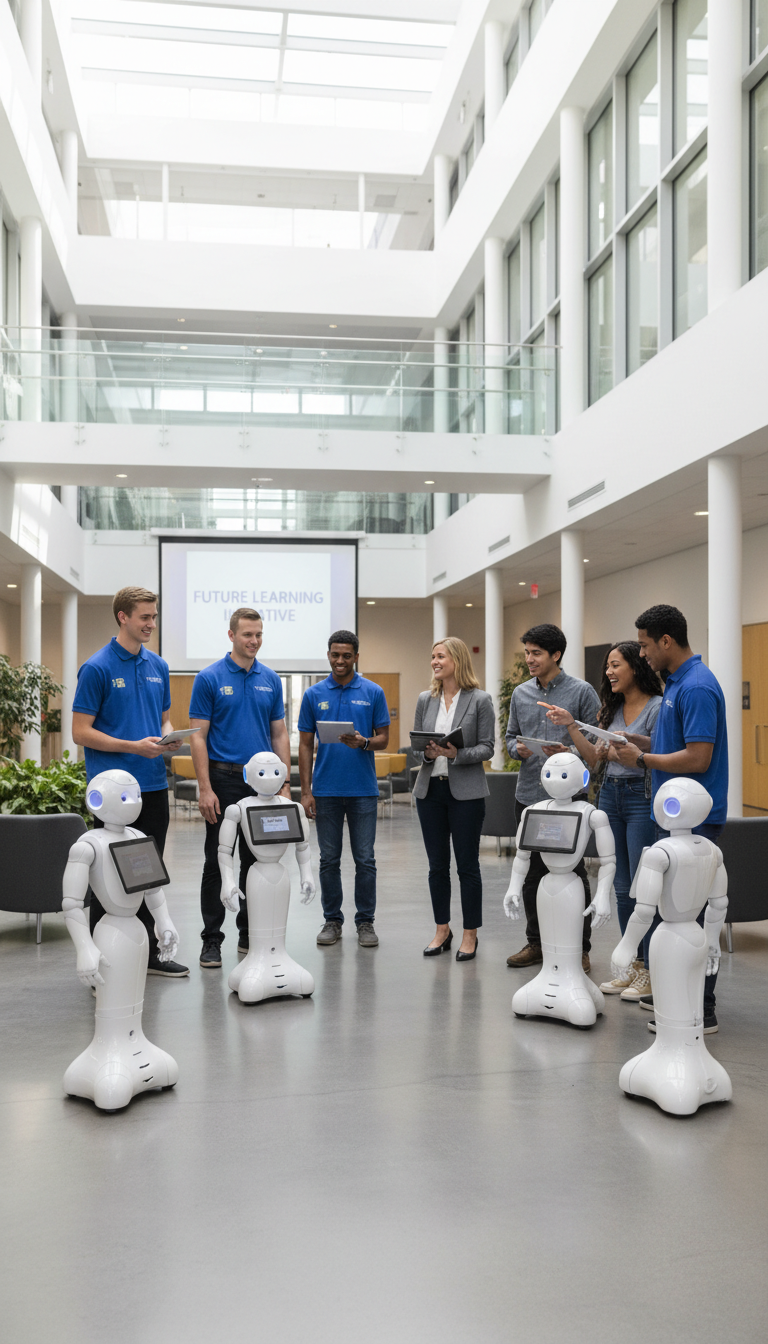
Moving from the controlled corridors of a hospital to the dynamic environment of an Australian school or university campus introduces new safety variables. While mobile robot safety standards Australia healthcare often focus on clinical risks, the education sector requires a specialized approach to student interaction and child safety. In high traffic zones like libraries or open playgrounds, robots encounter populations that are not only untrained but inherently curious.
Exaptec robotics integration focuses on implementing the Safe Monitored Stop function. This feature ensures that if a student breaches the robot’s immediate safety perimeter, the unit ceases motion instantly while maintaining power to its sensors, allowing for immediate resumption once the path is clear. For campus security robots performing overnight or weekend patrols, the convergence of physical AI and advanced robotics is essential. These systems must navigate the intersection of digital perception and physical movement to differentiate between a static architectural change and a dynamic human presence in low light conditions.
Operating in these spaces requires regulatory compliance support that accounts for the heightened duty of care in schools. We ensure that every deployment includes tailored staff training programs so that educators and security personnel can manage fleet interactions safely. By leveraging PLd rated sensing, we provide campuses with the assurance that autonomous systems can navigate unstructured educational environments without compromising student welfare.
Conducting a Robotics Risk Assessment for Australian Facilities
A robust risk assessment is the cornerstone of regulatory compliance support for any Australian facility. The process begins with Hazard Identification, which must account for the specific dynamics of your environment. In a Melbourne hospital or school, this involves evaluating collision risks with mobile equipment, trip hazards caused by low-profile robot bases, and the location of high-current battery charging stations relative to flammable materials.
Once hazards are identified, we move to Risk Analysis using the S1 to S4 severity scale to quantify potential impacts.
Severity Level | Description | Example Interaction |
|---|---|---|
S1 | Slight, reversible injury | A minor bump requiring no medical attention. |
S2 | Significant, reversible injury | A bruise or strain requiring first aid. |
S3 | Significant, irreversible injury | A fracture or permanent impairment. |
S4 | Fatal or catastrophic | A crushing or life-threatening incident. |
Risk Reduction follows the hierarchy of control. At Exaptec robotics integration, we prioritise Engineering Controls, such as safety-rated LiDAR and PLd sensors, over Administrative Controls like floor signage. However, in public spaces, a combination of both is essential. Finally, validation and thorough documentation are mandatory for upcoming 2026 regulatory audits. Facilities must demonstrate that every identified risk has been reduced to an acceptable level through verified safety functions, ensuring the site meets the evolving mobile robot safety standards Australia healthcare. This documentation serves as the legal proof of your duty of care in the event of a WHS inspection.
The Role of Staff Training in Robotics Compliance
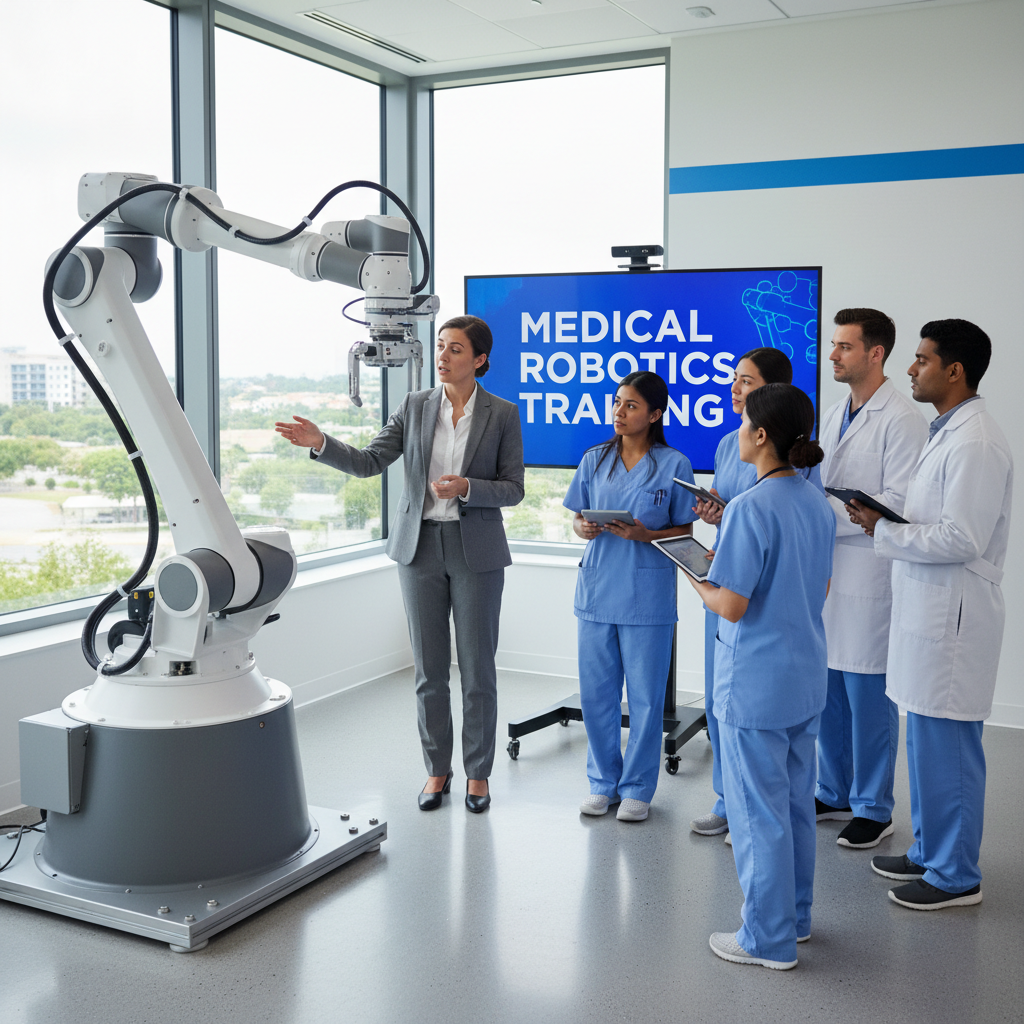
Safety is often viewed as a hardware problem, but in high-stakes clinical and educational environments, it is fundamentally human. Even the most advanced sensors can be undermined by human error or a lack of situational awareness. Achieving mobile robot safety standards Australia healthcare requires more than just a compliant AMR base; it necessitates a workforce that understands how to coexist with autonomous systems.
At Exaptec, our staff training programs move beyond basic operation to address behavioral safety. We teach healthcare and education professionals how to interpret robot signaling and manage telepresence units without obstructing critical care pathways. This training is vital to combatting WHS complacency, a phenomenon noted by Australian researchers where staff become overly comfortable with automation and begin to ignore safety protocols or bypass engineering controls.
Through Exaptec robotics integration, we provide regulatory compliance support that embeds safety into the facility culture. This proactive education ensures long term adoption and protects your ROI by minimizing avoidable collisions and system downtime, ultimately fulfilling the PCBU’s duty of care under the Model WHS Act. By empowering staff to act as informed partners with technology, facilities can transition from simple automation to a truly safe, integrated workforce.
Preparing for the 2026 safety standards is a critical step for any healthcare facility integrating mobile robotics into their daily operations. By understanding these Australian regulations now, you can ensure your technology remains compliant, safe, and efficient for years to come. If you want expert help managing these technical requirements, our team can provide the necessary guidance. You can find more information about our approach to robotics on our dedicated page. We are committed to helping you implement these standards with confidence and ease.