Telepresence robots schools Australia provide a vital link for students facing long term illness or geographical isolation by allowing them to virtually attend classes and maintain social connections in real time. These devices offer a physical presence that traditional video conferencing lacks, ensuring academic continuity and helping to close the educational gap for regional and hospital based learners. This technology empowers students to stay engaged with their curriculum and peers, ultimately improving long term educational outcomes across the country.
When a student is forced out of the classroom due to chronic illness or physical injury, the academic gap often becomes secondary to the social isolation they endure. Standard video conferencing tools fail to capture the nuances of classroom dynamics; they leave these students as passive observers rather than active participants. At Exaptec, we understand that true inclusion requires agency, not just a screen on a desk. This guide explores how telepresence robots are transforming the Australian educational landscape by providing mobility and physical presence for remote learners. We will examine the critical shift from standard video calls to autonomous interaction, while addressing the practicalities of Wi-Fi infrastructure, privacy compliance, and the total cost of ownership. By the end of this analysis, you will understand how to implement a robotics program that ensures no Australian student is left behind by their circumstances.
The Rise of Telepresence Robots in Australian Education
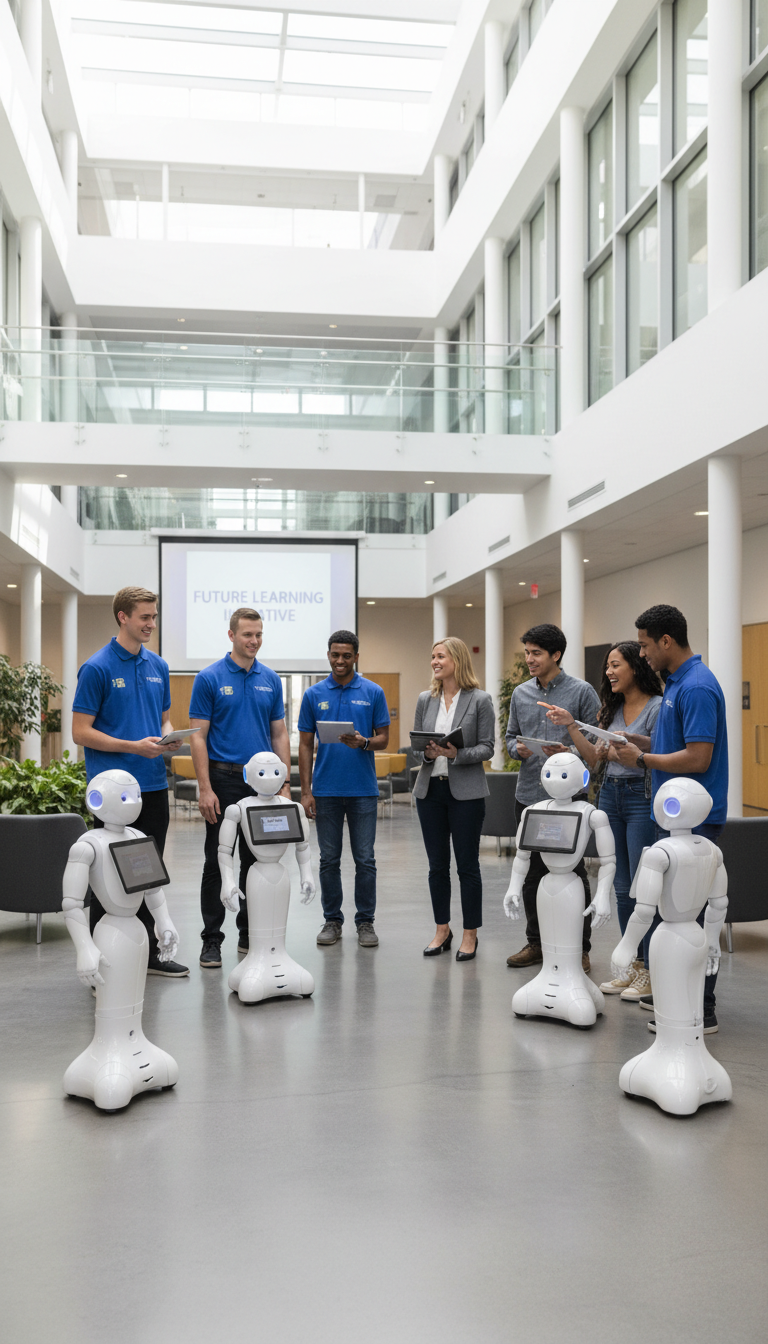
Australian education faces a persistent equity gap rooted in geography. Research indicates a stark disparity in outcomes; students in remote locations have a high school completion rate of just 50 percent, compared to a national average of 74 percent. This divide is often driven by limited access to specialized subjects and the social isolation that comes with physical distance.
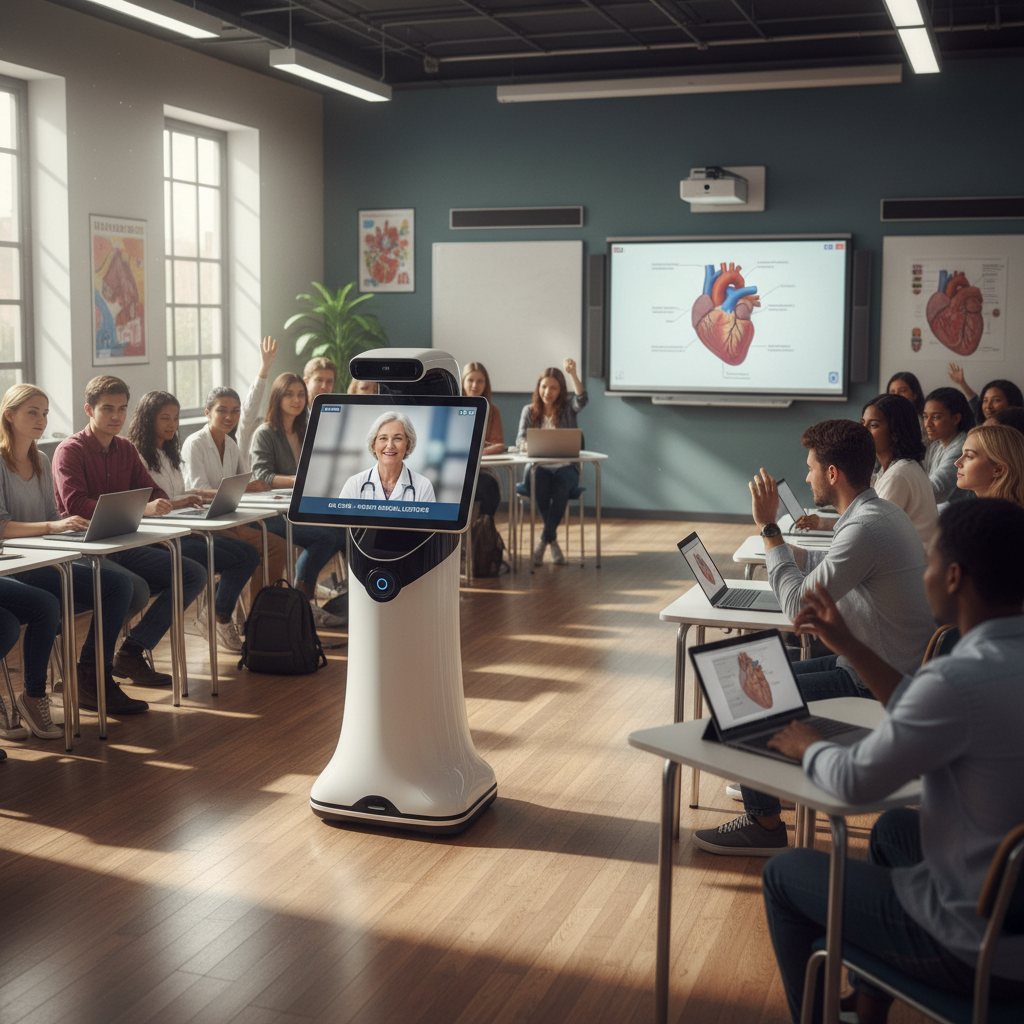
To counter these challenges, schools are adopting education robotics solutions that allow students to teleport into their learning environments. Telepresence robots like the AV1 or Temi function as a physical avatar for the student. Unlike standard video conferencing platforms like Zoom or Skype, which leave students as passive observers on a screen, these robots provide genuine agency. The remote user can control the robot’s movement, rotate its head to follow a speaker, and interact with peers in real time.
This physical presence is a critical differentiator. It transforms the remote student from a digital image into a participant with a seat at the table. By integrating robotics integration services into the classroom, schools can provide a more inclusive environment. When deploying telepresence robots schools Australia can bridge the resource gap, ensuring that health or distance no longer acts as a barrier to a high quality education.
Bridging the Gap for Students with Chronic Illness and Injury
For a student diagnosed with cancer or recovering from a severe injury, the disruption to their life is twofold: the physical toll of treatment and the psychological impact of being severed from their community. Qualitative pilot studies, particularly those examining children and adolescents with chronic conditions, reveal that the primary benefit of these devices is the mitigation of social isolation. While academic momentum is crucial, the robot serves as a vital social lifeline to their peer group in Melbourne, Sydney, or regional Australia.
In these clinical or home-recovery scenarios, the robot does not just transmit audio and video; it embodies the student. When a classmate carries the robot to the school yard or includes it in a group science experiment, the absent child remains a present member of the social fabric. This continuity is essential for mental health. Research into education robotics solutions shows that maintaining these daily interactions reduces the anxiety associated with eventually returning to school full-time. Without this link, the student faces a "double recovery" where they must heal physically while simultaneously working to bridge a massive social and academic gap.
Exaptec assists schools in deploying robotics integration services that prioritize these human outcomes. For a student undergoing long-term treatment, the ability to control their "eyes" in the room provides a sense of normalcy and control that is often stripped away by a hospital environment. By ensuring that telepresence robots schools Australia are properly integrated into the school’s daily routine, we help facilitate a seamless transition back to the classroom once the student is healthy enough to return in person. This approach treats the robot not as a piece of hardware, but as a bridge for belonging.
Why Agency Matters: Telepresence vs Standard Video Calls
The psychological distinction between a flat video call and a physical avatar is grounded in the concept of agency. In a standard Zoom or Skype session, the remote student is often a passive observer, fixed to a single perspective and dependent on others to adjust their view. Telepresence robots eliminate this dependency by providing the user with independent control over their spatial presence. Research into education robotics solutions indicates that students and instructors consistently prefer robots because they offer a literal seat at the table, allowing the remote participant to command their own attention and movement.
This autonomy is crucial during collaborative tasks. While a laptop screen remains stationary, a robot like the AV1 or Temi allows a student to rotate their head to follow a speaker or move their entire base to join a breakout group. The ability to navigate school corridors and look around the classroom at will transforms the experience from watching a lesson to inhabiting the space. By utilizing professional robotics integration services, schools ensure these devices are tuned for high responsiveness, which significantly reduces the cognitive load on the student. Ultimately, the physical presence of the robot creates a two way social obligation; peers treat the robot as a classmate rather than a broadcast, fostering a much deeper level of inclusion.
Supporting Remote and Rural Student Inclusion
The vast geography of Australia creates systemic barriers to educational equity. With remote high school completion rates sitting at just 50 percent, the need for scalable education robotics solutions is clear. Regional schools often lack the budget or local talent pool to staff specialist subjects, such as advanced physics, specific languages, or higher level mathematics, often forcing students to rely on isolating correspondence learning or intensive travel.
Telepresence robots schools Australia provide a more sustainable model by allowing a specialist educator or a peer to virtually inhabit a classroom hundreds of kilometers away. Unlike static video conferencing, the mobile nature of the robot allows a remote specialist to move between desks, observe student work directly, and facilitate hands-on labs. This level of interaction is vital for maintaining academic momentum in subjects that require active demonstration.
From a logistical standpoint, the cost benefits are significant. Utilizing robotics integration services to deploy telepresence units is far less resource-intensive than funding teacher relocation programs or recurring travel for rural student clusters. By removing the physical friction of distance, schools can offer a broader curriculum that keeps regional students engaged and aligned with national completion averages. If your facility needs to bridge these geographic gaps, you can contact Exaptec for a consultation to discuss tailored hardware and regional support.
Practical Implementation: Wi-Fi, Training, and Classroom Culture
Successful deployment begins with the network infrastructure. A telepresence robot requires a stable, low-latency connection to maintain a high-definition video stream as it traverses the campus. Many Australian schools discover that standard guest Wi-Fi or congested BYOD networks are insufficient for these devices. Exaptec works with school ICT departments to audit signal strength and configure dedicated VLANs, ensuring the robot maintains a seamless handoff between access points. This technical calibration is essential to prevent the "frozen screen" lag that can discourage a remote student from participating in fast-paced classroom discussions.
Social integration is equally critical. To prevent the device from becoming a distraction, teachers should introduce the robot as a physical extension of the absent student rather than a novelty. This involves setting clear boundaries: defining where the robot can sit, establishing rules for peer interaction, and ensuring the remote student feels empowered to signal for attention. Exaptec provides custom staff training to help educators navigate these cultural changes. We guide teachers on how to manage the robot during group activities or transitions, ensuring that telepresence robots schools Australia become a natural part of the learning environment.
We also address the practicalities of a buddy system. Assigning a classmate to assist with door thresholds or docking the robot at the end of the day fosters a sense of shared responsibility. By utilizing professional robotics integration services and comprehensive education robotics solutions, schools move from simply owning hardware to executing a robust inclusion strategy. If you need assistance with the technical or pedagogical rollout of these systems, you can contact Exaptec for a consultation to ensure your implementation is both secure and effective.
Addressing Privacy and Regulatory Compliance in Australian Schools
Deploying telepresence robots schools Australia requires navigating a complex landscape of data security and privacy regulations. Schools must adhere to strict Australian Department of Education guidelines, particularly in Victoria and New South Wales, where Privacy Impact Assessments (PIAs) are standard procedure. A primary concern for administrators is the risk of unauthorized access or the potential for recording within a sensitive classroom environment.
Modern education robotics solutions mitigate these risks through end to end encrypted streams. For example, hardware like the AV1 is designed with privacy as a core feature; it does not store video data, and the stream is accessible only to the designated student via a secure, one to one connection. As a Melbourne based specialist, Exaptec ensures these systems are configured to meet Australian standards for data sovereignty. We assist schools in aligning their robotics integration services with regional privacy policies, providing the necessary documentation and technical verification to satisfy compliance officers. If your school department requires a detailed security briefing, you can contact Exaptec for a consultation to review specific compliance frameworks.
The Total Cost of Ownership for Educational Robotics
Determining the financial commitment for telepresence robots schools Australia involves more than the initial purchase price of the hardware. While a base unit might range from $5,000 to $15,000 AUD, schools must account for the Total Cost of Ownership (TCO) to ensure long-term viability. A successful deployment of education robotics solutions includes annual software licensing, which covers encrypted streaming and remote management interfaces.
Cost Category | Description |
|---|---|
Hardware | Initial purchase of the robot, batteries, and docking station. |
Software Licensing | Annual fees for secure connectivity and platform updates. |
Technical Integration | Network configuration, VLAN setup, and security compliance audits. |
Professional Development | Staff training to integrate the device into daily pedagogy. |
Lifecycle Maintenance | Battery replacements, hardware repairs, and technical support. |
Engaging robotics integration services early prevents hidden costs related to network failures or poor user adoption. When viewed through the lens of student retention, the investment is significant. Given the 24 percent gap in high school completion for remote students, the cost of a robot is a small fraction of the long-term economic loss associated with student disengagement. Prioritizing these tools is an investment in a school’s social infrastructure and the mental wellbeing of the student body. For a detailed breakdown of hardware options and implementation timelines, you can contact Exaptec for a consultation to align your budget with your facility’s specific needs.
Integrating telepresence technology allows Australian students to maintain vital social and academic links during extended absences. This continuity of learning is essential for student success and long-term wellbeing. If you want expert help identifying which robotic solutions best fit your school’s unique needs, please view our professional services for more information. We can help you navigate the technical requirements and implementation strategies. Our team is dedicated to ensuring that no student is left behind due to distance or illness.