Campus security automation Australia is transforming educational environments through the use of autonomous robots, 360-degree thermal imaging, and AI-driven access control systems. These technologies provide schools and universities with continuous, real-time surveillance while ensuring strict adherence to data privacy regulations and cybersecurity standards. By 2026, these automated solutions will be essential for managing large-scale campus safety and optimizing emergency response times.
Educational institutions across Australia face a persistent challenge in maintaining comprehensive security across sprawling campuses while managing rising operational costs. Traditional manual patrols often leave critical gaps in surveillance; these vulnerabilities are particularly evident during overnight shifts or across isolated facility perimeters. As safety expectations for students and staff continue to intensify, Australian schools and universities require more than just extra eyes on the ground. This guide explores the shift toward campus security automation, detailing how autonomous robots serve as force multipliers for existing security teams. You will learn about the practical benefits of robotic facility inspections, the landscape of Australian privacy regulations, and the strategic importance of custom software integration. By examining the Exaptec approach to campus robotics, administrators can build a sophisticated security infrastructure that balances human intuition with the tireless precision of automated systems.
The Evolution of School Safety: Why Campus Security Automation Australia is Trending
The landscape of educational security is undergoing a fundamental transformation. For years, schools and universities relied heavily on static CCTV systems and reactive alarms. However, as the Australian robotics market expands, reaching an estimated A$1.8 billion by 2026, educational institutions are shifting toward more dynamic solutions. This growth reflects a broader trend: the transition from passive monitoring to campus security automation Australia. This evolution is driven by the practical need for consistent, 24/7 oversight across sprawling metropolitan and regional campuses.
Maintaining a secure environment on large university grounds presents significant logistical hurdles. Staffing 24 hour patrols for vast perimeters is increasingly difficult and costly. Traditional fixed cameras, while useful, often leave blind spots that unauthorized individuals can exploit. By contrast, autonomous mobile robots (AMRs) provide a persistent presence, moving through corridors and across fields to provide coverage that static systems cannot match. Unlike simple automated gates or timed locks, which are binary in function, true AMRs utilize artificial intelligence to navigate complex environments and identify anomalies in real time.
As a specialist in robotics integration services, we see schools moving beyond basic hardware. They are looking for sophisticated systems that offer more than just a moving camera. Our robotics portfolio illustrates how these machines operate as intelligent nodes within a larger safety framework. This shift ensures that security is no longer just about recording events after they occur; it is about active detection and prevention through advanced, mobile automation.
How Autonomous Security Robots Enhance Educational Facility Inspections
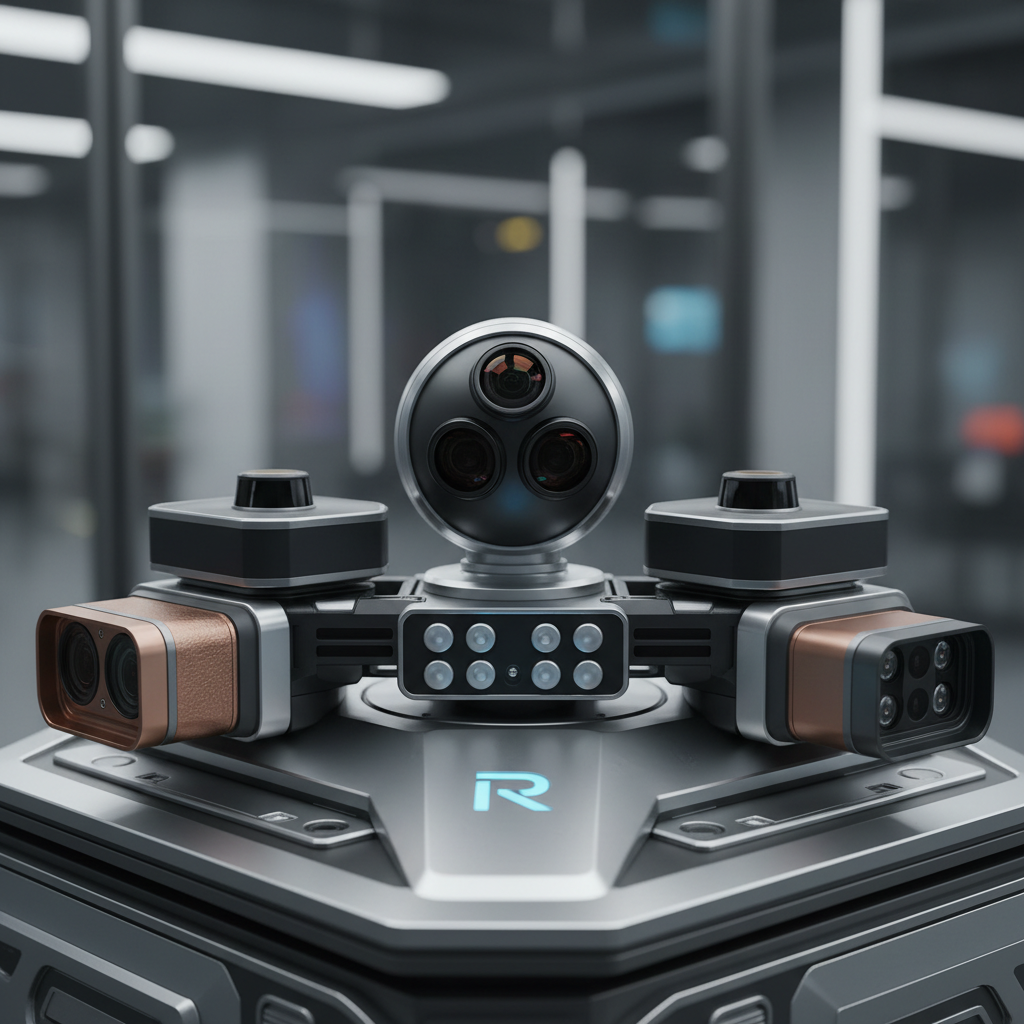
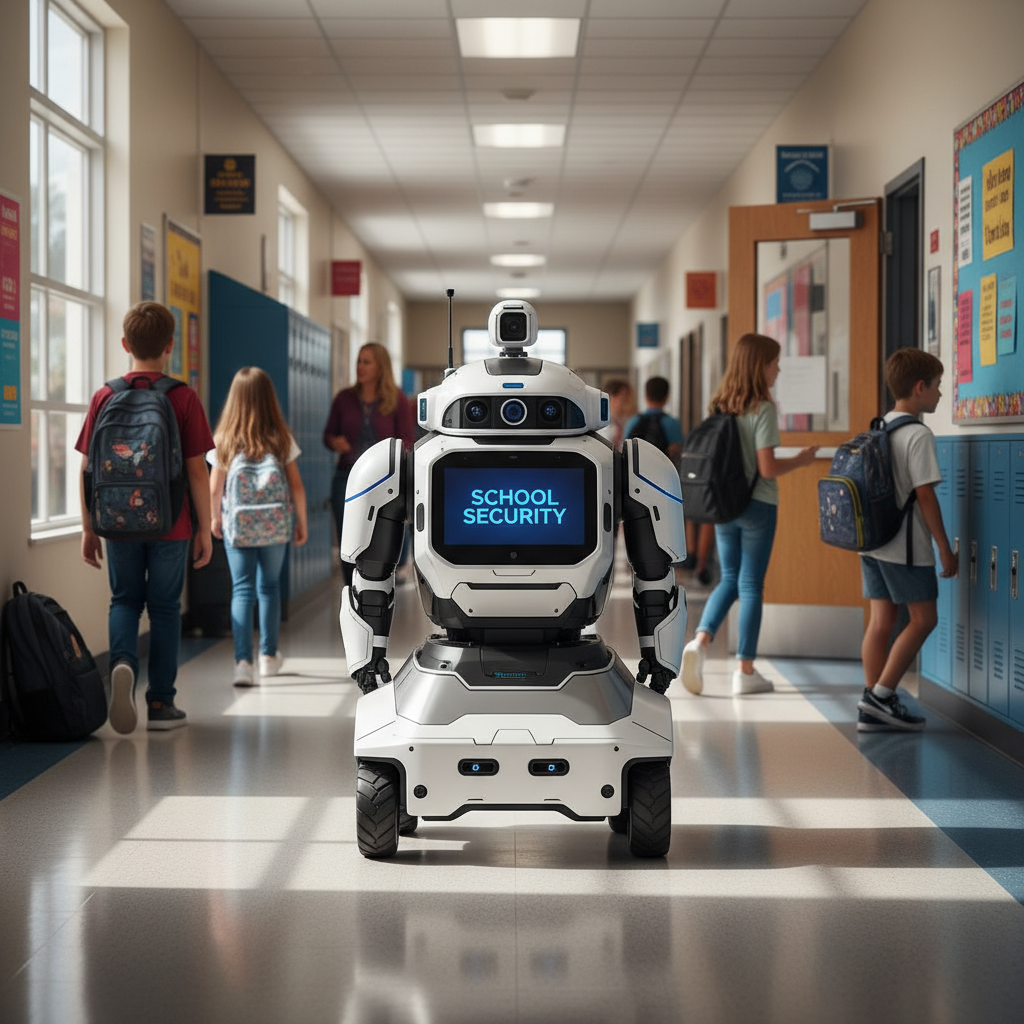
Moving from static cameras to mobile units requires a deep understanding of the sensor suites that make these machines effective. Modern security robots are equipped with a 360 degree field of vision, providing continuous, panoramic surveillance that eliminates the blind spots typical of fixed installations. This is augmented by high definition Pan, Tilt, Zoom (PTZ) cameras that allow remote operators or AI algorithms to scrutinise specific objects, such as a misplaced bag or a suspicious vehicle, from a distance. For night time operations or low visibility conditions, thermal imaging sensors become critical, identifying heat signatures of individuals or detecting equipment overheating before a fire occurs.
The physical versatility of these robots is what makes them suitable for the varied landscapes of Victorian institutions. A sprawling campus like Monash University, Clayton, or the University of Melbourne, Parkville, features a mix of paved walkways, grassed commons, and indoor corridors. All terrain capabilities ensure that the robot can transition between these surfaces without intervention. During operating hours, the robots use advanced LiDAR and obstacle avoidance to navigate safely around students and faculty. After hours, they perform rigorous facility inspections, following pre-programmed routes to identify maintenance issues like water leaks or unsecured doors that manual patrols might miss.
Efficiency is maintained through autonomous power management. When battery levels reach a specific threshold, the robot returns to its automatic charging dock, ensuring it remains operational without requiring a staff member to monitor its status. This technical autonomy allows the security team to rely on a persistent presence. As part of our robotics integration services, Exaptec ensures these hardware capabilities are tuned to the specific layout of the site. By reviewing our robotics portfolio, facility managers can see how these technical specifications translate into a cohesive security layer, providing a level of granular detail that traditional campus security automation Australia solutions often lack.
Addressing the Big Question: Will AI Robots Replace Security Guards in Australian Schools?
A common question surfacing in boardrooms and facilities offices across the country is: will AI robots replace security guards? The short answer is no. Instead, these machines act as force multipliers. In the context of campus security automation Australia, the objective is not to eliminate human roles but to reallocate human expertise to where it matters most. Robots are purpose-built to handle the 3 Ds: tasks that are Dull, Dirty, or Dangerous.
Consider the practicalities of a university campus in the middle of a winter storm. An autonomous unit can patrol a remote, rain-slicked perimeter at 3:00 AM with perfect consistency and zero physical discomfort. During this time, the human guard remains in a central command post, overseeing multiple data streams and preparing for high-level intervention if an anomaly is detected. This collaborative approach allows Australian schools to maintain a much higher security posture without necessarily increasing headcount.
While humans excel at nuanced decision-making, conflict de-escalation, and complex problem-solving, they are susceptible to fatigue and environmental distractions. By offloading routine, repetitive surveillance to an AMR, the existing security team can focus on areas requiring human empathy and judgement. Our robotics integration services focus on creating this synergy, ensuring that the technology supports the staff rather than complicating their workflow.
Evidence from our robotics portfolio shows that institutions utilizing automation achieve more comprehensive coverage. A robot does not require breaks and maintains the same level of alertness at the end of a twelve-hour shift as it does at the start. For educational facilities managing tight budgets, this efficiency is vital. It enables a shift from reactive security to a proactive model where the robot identifies a potential risk and the human guard executes the professional response.
Navigating Regulatory Standards: Privacy and Data Security for Australian Educators

The synergy between human guards and autonomous units relies on a foundation of trust; in the Australian educational sector, this is governed by rigorous legal frameworks. Implementing campus security automation Australia requires more than just deploying hardware; it necessitates a comprehensive understanding of the Australian Privacy Principles (APPs) under the Privacy Act 1988. Because these robots capture high definition video, thermal data, and potentially location metadata, schools must ensure that every byte of data is collected, stored, and managed in compliance with strict privacy standards.
Exaptec provides specialized regulatory compliance support to help institutions navigate these complexities. For instance, data captured by an AMR must be encrypted both at rest and in transit, with access restricted to authorized personnel. This is particularly critical in environments involving minors, where student data protection is paramount. Our robotics integration services ensure that the software backend aligns with specific state requirements, such as the Victorian Department of Education’s School Security Policy or the NSW Department of Education’s safety guidelines.
Compliance Aspect | Requirement for Schools | Robotics Integration Solution |
|---|---|---|
Data Sovereignty | Storage on Australian servers | Local cloud or on-premise hosting |
Anonymisation | Protecting student identities | Real time face blurring in non-critical zones |
Audit Trails | Records of data access | Encrypted, time stamped activity logs |
By addressing these regulatory hurdles during the planning phase, we ensure that the transition to automation enhances safety without compromising legal standing or community trust. Our robotics portfolio includes systems that demonstrate this balance, providing robust security while adhering to the highest standards of data integrity and ethical surveillance.
The Strategic Advantage of Custom Software Integration for Campus Safety

Deploying a security robot is not as simple as unboxing hardware and switching it on; a 'box-dropped' solution often fails to account for the specific operational workflows of an Australian school. For campus security automation Australia to be effective, the hardware must be deeply embedded into the institution's existing ecosystem. Through our robotics integration services, we bridge the gap between autonomous hardware and a facility’s existing security infrastructure, ensuring the robot functions as a communicative member of the safety team.
This integration allows for the synchronisation of real time alerts with a central dashboard or a mobile app used by facility managers. If a robot detects a perimeter breach or a fire risk after hours, it does not merely record the event; it triggers an immediate notification to the designated emergency response system. This level of connectivity is powered by the use of digital twins, where a virtual, high-fidelity map of the campus is created to ensure precision navigation. By simulating the campus layout, we can program specific patrol paths that prioritise high-risk areas while avoiding pedestrian bottlenecks.
Feature | Box-Dropped Robot | Exaptec Integrated Solution |
|---|---|---|
Connectivity | Standalone operation | Direct link to school security units |
Alerting | Delayed manual review | Real time mobile and dashboard notifications |
Navigation | Basic obstacle avoidance | Digital twin mapping for precision movement |
Scalability | Limited to hardware units | Software-driven fleet management |
By focusing on custom software, we ensure that every robot in our robotics portfolio adds measurable value to the school's safety protocols. This bespoke approach ensures that the technology adapts to the school, rather than forcing the staff to adapt to the technology.
Implementation in Melbourne: The Exaptec Approach to Campus Robotics
Implementing campus security automation Australia requires a nuanced understanding of Victoria’s diverse educational environments. Our approach begins with a comprehensive on-site facility inspection, accounting for the unique architectural challenges of high-density CBD campuses or expansive, multi-acre regional school grounds. We then utilize digital twins to map these spaces with centimetre-level precision, a core component of our robotics integration services.
Phase | Action Item | Local Benefit |
|---|---|---|
Deployment | Site mapping and digital twin setup | Tailored for specific Victorian campus layouts |
Compliance | Aligning with VIC Dept. of Education standards | Professional regulatory compliance support |
Training | In-person staff workshops | Hands-on expertise for Melbourne-based teams |
Maintenance | Rapid response and hardware updates | Minimal downtime for local institutions |
By choosing a Melbourne-based partner, schools gain immediate access to technical support and firmware updates that reflect current Australian standards. We provide the necessary on-site staff training to ensure your security team can manage the systems in our robotics portfolio effectively. This local proximity ensures that when regulatory requirements change or hardware needs servicing, your campus security remains uninterrupted and fully optimized for the Victorian landscape.
Securing a modern campus requires a forward thinking approach that balances advanced technology with practical safety needs. As 2026 approaches, integrating automated security systems will be essential for protecting students and staff while streamlining daily operations. If you want expert help tailoring these solutions to your unique environment, our team is ready to assist. You can learn more about our range of robotics services to find the right path for your institution.